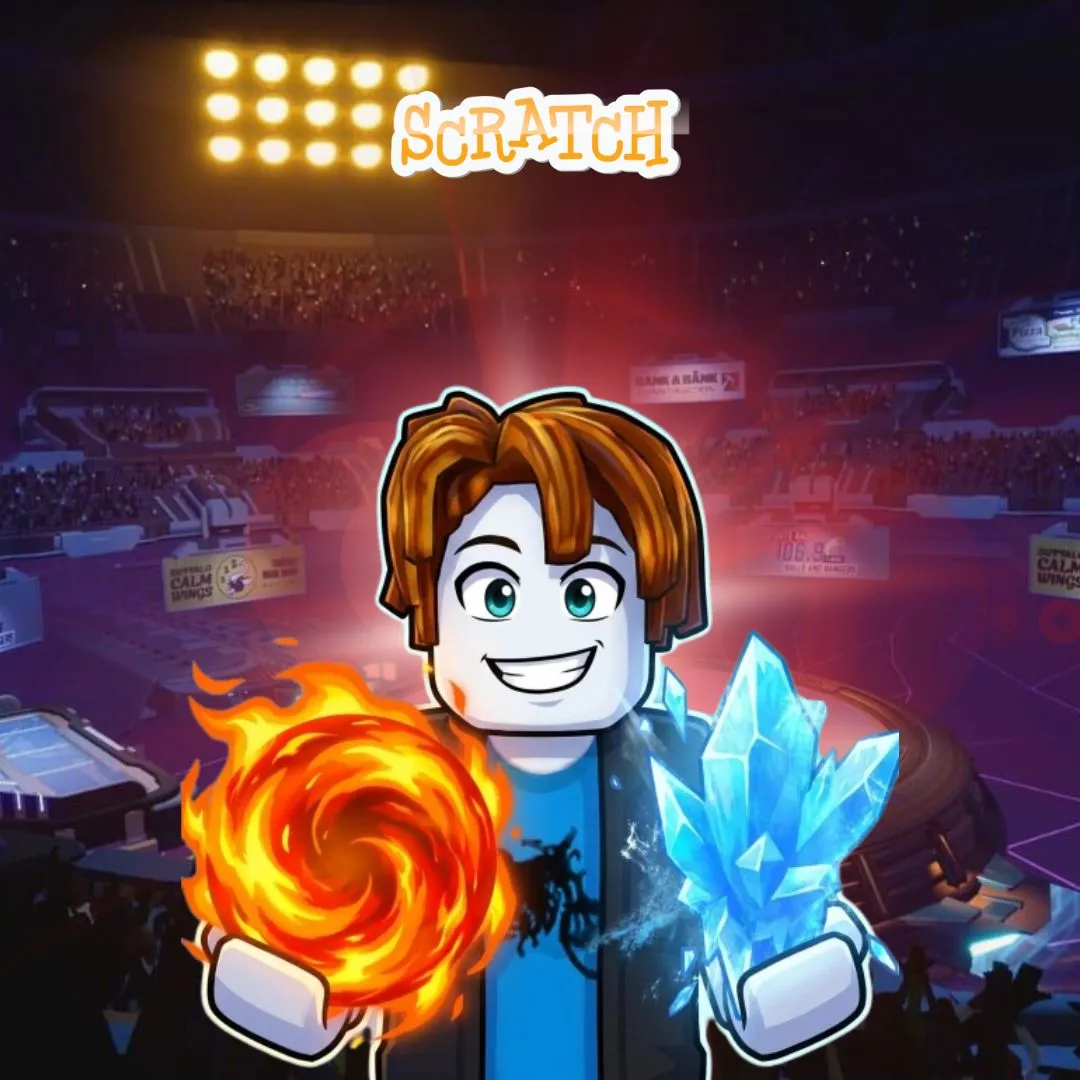

Do you love timing your moves perfectly, deflecting anything thrown at you, and being the last one standing in a wild arena? Then get ready, because today we are going to build our very own Blade Ball Arena in Scratch. You will code deflect timing so players can bounce the ball back, add speed scaling so the game gets tougher round after round, and build a last player standing mode that crowns one champion. Building your own arena battle is one of those fun coding projects that mixes fast reflexes with real programming logic, and it feels amazing to build yourself.
Scratch programming makes this action packed project beginner friendly. The colorful drag and drop blocks let young coders see their logic clearly, so coding for kids stays exciting instead of scary. By the end, you will understand variables, collision detection, and loops, and you will have a real arena game to challenge your friends. Grab your controller and let us enter the arena.
Why a Blade Ball Arena Is a Great Coding Project
Kids love games that test their reflexes, and an arena battle brings instant excitement. Dodge, deflect, survive. That simple loop is easy to understand, which gives young coders a great head start. They can focus their energy on building cool mechanics instead of figuring out the goal.
This project is also packed with real computer science. Deflecting needs collision checks. Speed scaling needs variables that grow over time. Last player standing needs a counter that tracks who is still in the game. You learn all of it while making something thrilling to play. That is why this kind of arena battle ranks among the best beginner coding games for action loving kids. If your child enjoyed our Pokemon-style battler build or the Piggy escape game, this is a thrilling next step.
The Story: The Champions of Glowfield
In the shining town of Glowfield, one glowing ball holds the power to grant a single wish. Every year, the bravest kids gather in a round arena to compete for it. The rule is simple. Deflect the ball back with perfect timing, dodge when you must, and stay standing longer than everyone else.
Your character steps into the arena, heart racing, palms sweaty. The ball zips across the field faster with every round. One good deflect could turn the tables. One missed dodge could send you home. Only the sharpest reflexes and the smartest code will crown the champion of Glowfield. Ready to step into the arena? Let us start building.
Blade Ball Arena: Code the Deflect Timing
The heart of any Blade Ball Arena is the deflect move. Players press a key at just the right moment to bounce the ball away before it hits them. We check if the ball is close, then reverse its direction when the player reacts in time.
| Action | What Happens | Key Used |
|---|---|---|
| Deflect | Bounces the ball away | space |
| Dodge left | Moves player out of the path | left arrow |
| Dodge right | Moves player out of the path | right arrow |
Here is a script that checks if the ball is near, then reverses it when the player presses space in time. Good timing is everything in this kind of match.
That single script rewards fast reactions and punishes slow ones. This is exactly the kind of tense, skill based moment that makes this arena game so much fun to play again and again.
Blade Ball Arena: Add Speed Scaling
A great arena should never feel the same twice. Speed scaling makes the ball move faster as the match goes on, keeping players on their toes. We use a variable that slowly climbs, which pushes the ball’s movement speed higher every few seconds.
Every eight seconds, the ball gets a little quicker, so players must react faster and faster. This rising challenge is a simple trick, but it turns a calm match into a heart pounding finish.
Blade Ball Arena: Build Last Player Standing
The final piece is the win condition. In a true Blade Ball Arena, only one competitor should remain when the match ends. We track how many lives each player has left and check often to see who is still in the game.
| Variable | Purpose | Starting Value |
|---|---|---|
| lives | Tracks player health | 3 |
| playersLeft | Counts active players | 4 |
| roundWinner | Stores the champion’s name | empty |
When only one player is left standing, the game announces the winner. That dramatic finish is the payoff for every deflect and dodge along the way.
Blade Ball Arena: Coding Skills Kids Learn
This single game quietly teaches a huge amount. Here is what your young coder practices while having a blast:
| Skill | Where It Shows Up |
|---|---|
| Collision detection | Checking if the ball hits a player |
| Variables | Speed, lives, and player counts |
| Conditions | Deciding deflect or damage |
| Loops | Moving the ball every frame |
| Broadcasts | Announcing the champion |
These are the same building blocks used in real games and apps. Master them young, and harder languages feel far friendlier later. When a learner is ready for text based code, our Algorithm Avengers program for teens is the perfect next leap.
Fun Ways to Level Up Your Arena
Once the basics work, let creativity take over. Encourage your child to remix the arena and make it truly their own:
Add power ups that slow the ball down for a few seconds. Create obstacles players must dodge around. Add a countdown timer for extra pressure. Design cool costumes for each competitor. Build a leaderboard that tracks the most wins. Every tweak sharpens their Scratch programming skills and keeps the action going. For more remix ideas, kids love our Sprunki music mixer and the Adopt Me pet trading builds.
Start Your Coding Adventure
Ready to Code Games Like a Pro?
Now that you can build your own Blade Ball Arena in Scratch, why stop at one project? At Junior Coderz, kids build games, apps, and even AI tools with friendly live teachers guiding every step. We turn screen time into skill time, one exciting project at a time.
Book a coding class, join a live Scratch workshop, or dive into our hands-on Scratch coding for kids program. Curious about smart tech too? Explore our AI Hybrid Course where coding meets artificial intelligence.
See what our young coders create every day on Instagram and Facebook. Then grab a free spot below and let your child build their very first masterpiece.
Book Your Free Trial ClassConclusion
You just turned a fast paced arena idea into your very own Scratch creation. From perfectly timed deflects to rising speed scaling and a tense last player standing finish, every part taught a real coding skill. Building a Blade Ball Arena yourself proves that the smartest way to understand programming is to make something thrilling to play.
So keep deflecting and keep dreaming. Remix your arena, share it with friends, and plan your next big update. Coding for kids is not about getting everything perfect on the first try. It is about curiosity, creativity, and the joy of watching your ideas come to life. Whenever you feel stuck, our friendly team at Junior Coderz is ready to guide you. Connect with us on LinkedIn and start your coding journey today.
FAQs
Do I need to play the original game to build this?
No, you do not need the original game at all. This is your own version built in Scratch using simple blocks. It only borrows the fun deflect and survive idea, so any child can build it free in a web browser without downloading anything.
What age group can build an arena game like this?
Most kids aged eight and up can follow along with a little support. Younger coders may need help with variables, while older kids can build it solo. It works wonderfully as one of the more rewarding beginner coding games for families.
Is Scratch good for learning real coding?
Absolutely. Scratch teaches the same core ideas used in real programming, like variables, loops, and conditions. The drag and drop blocks remove typing errors so kids focus on logic. It is the perfect first step before moving to text based languages.
How long does this project take to finish?
A focused young coder can build a basic working version in two or three sessions. Adding power ups, costumes, and extra players takes a little longer. Breaking it into one feature at a time keeps the project fun and easy to manage.
What should my child learn after this game?
Once this feels easy, try bigger Scratch builds or step into text based coding like Python. Junior Coderz offers live classes that guide kids from blocks to real code, so every learner keeps growing at a pace that feels exciting, not stressful.