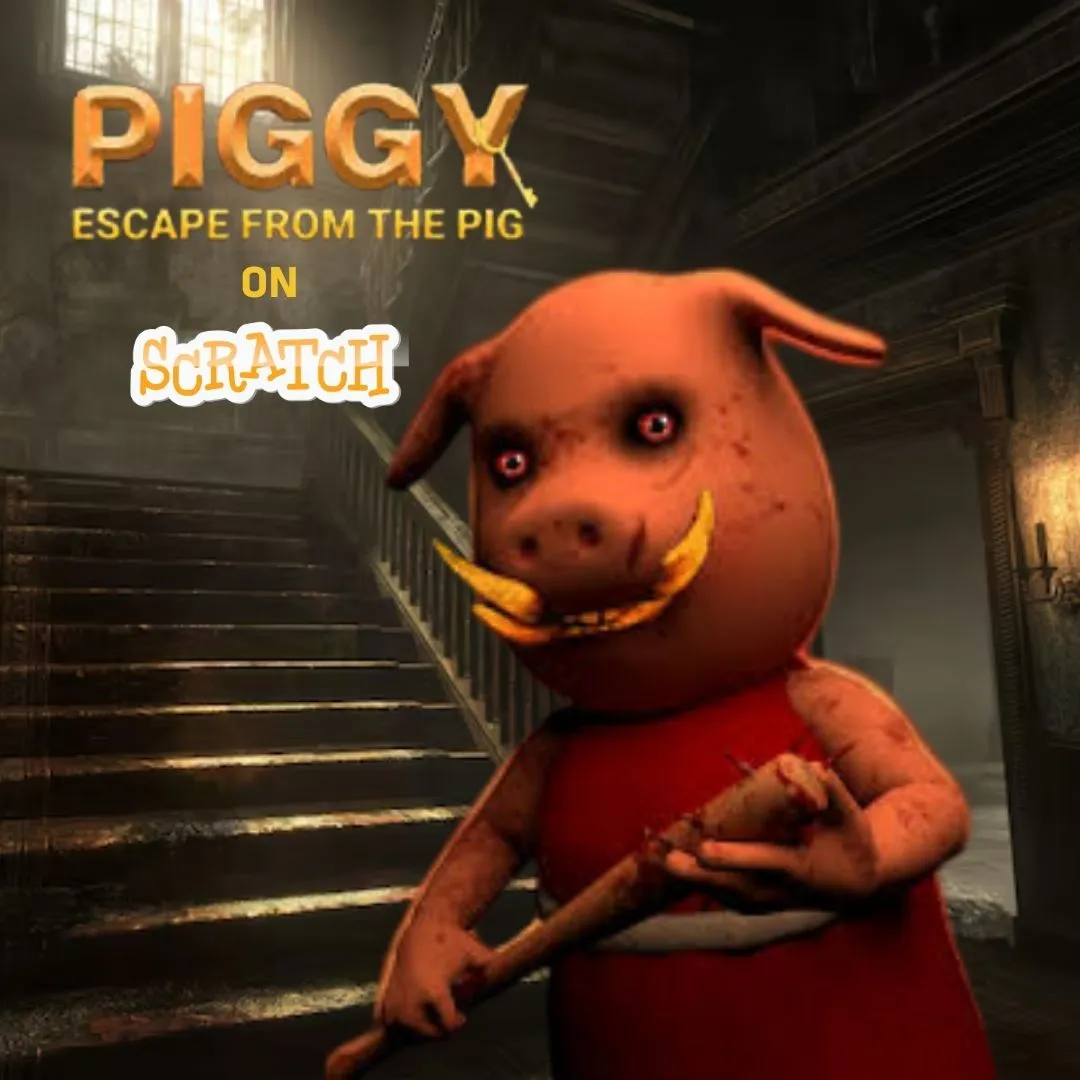
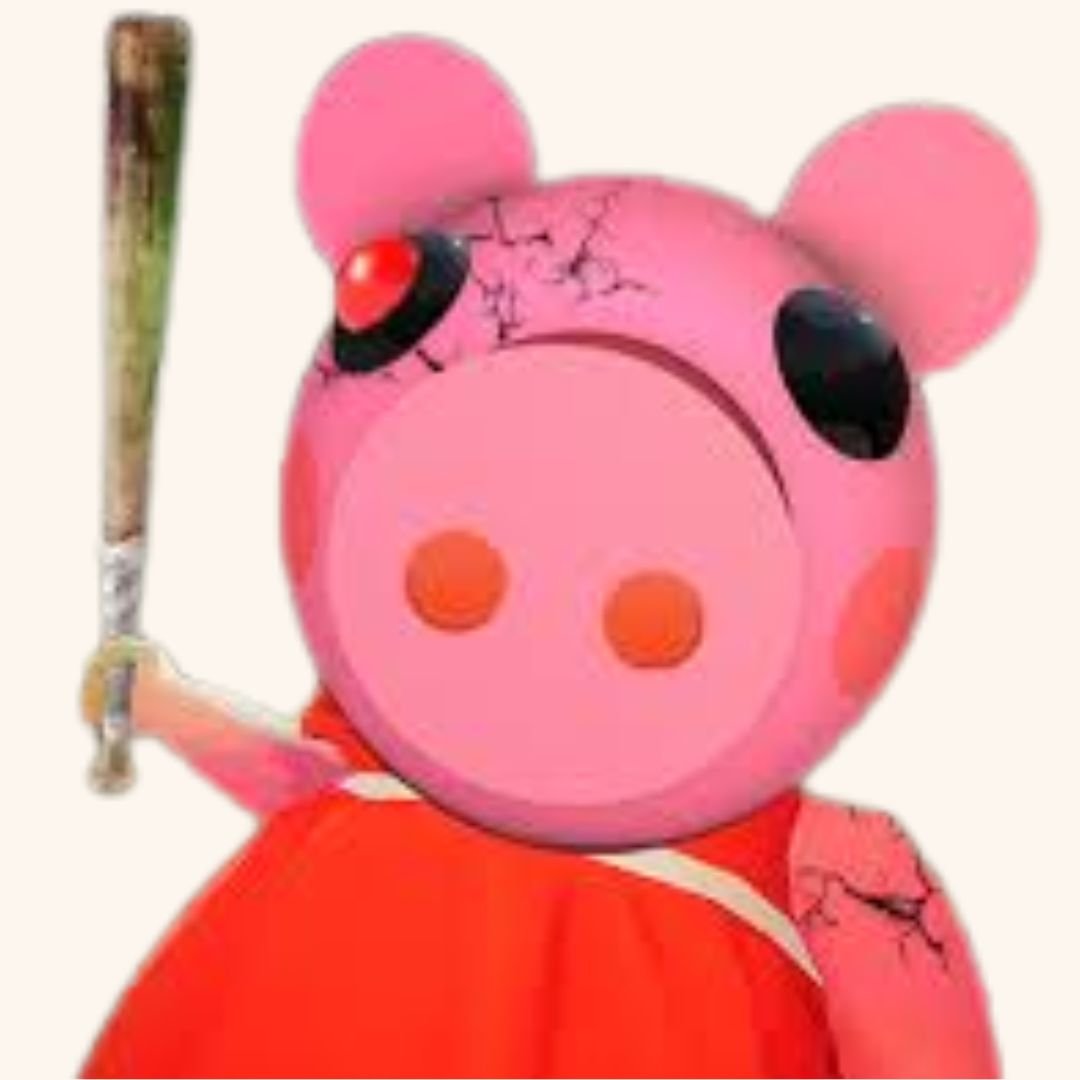
Imagine a pink pig hunting you through dark hallways while your friends scatter in every direction searching for keys, clues, and escape routes. That heart-pounding chaos is exactly what made Piggy one of the most explosive horror-survival games on Roblox, with billions of plays and a dedicated fanbase of young gamers worldwide. Now your child can stop just playing it and start building their very own version! In this tutorial, we walk through every step of creating a Piggy Escape Game in Scratch, complete with a chasing AI, solvable map puzzles, and multiplayer round mechanics. This project teaches variables, AI pathfinding, broadcasts, conditionals, and game state management through one thrilling build. Whether you are a parent searching for meaningful screen time, an educator looking for engaging classroom projects, or a kid who wants to code something epic, this guide has everything you need.
🐷 The Story: Escape from Glitch Farm
Glitch Farm was once a cheerful place. Then something went wrong with the code. The farm’s guardian, a large glitchy pink pig named OINK-9, got corrupted. Now it chases anyone who enters the farm and does not stop until they escape or get caught.
A group of young coders stumbled into the farm while testing a portal game. Now they are scattered across the barn, the cornfield, and the old shed. Each location has a clue, and together those clues unlock the main gate. The only way out is teamwork, quick thinking, and knowing how to read the patterns in OINK-9’s movement code. Your player builds the farm, programs the pig, and decides how the escape unfolds.
Why a Piggy Escape Game Is the Perfect Scratch Project for Kids
The original Piggy game on Roblox captivated millions of kids because it combines horror tension with puzzle-solving and social play. Building your own version in Scratch recreates that same thrilling experience while teaching real programming skills. Specifically, the chase AI teaches coordinate tracking and pathfinding logic. In addition, the map puzzles teach collision detection and conditional unlocks. Furthermore, the multiplayer round system teaches game state management, score tracking, and broadcast events.
Essentially, every exciting mechanic in the game maps to a foundational coding concept. Kids are not learning abstract theory. Instead, they are solving the exact same design problems that professional game developers face every day. Moreover, the horror-survival theme provides strong motivation. Players want to survive the next round, which means coders want to keep building the next feature. If your child has already built projects like a DOORS-style Horror Escape Game or a 99 Nights Survival Game, this project is the ideal next step.
Planning Your Piggy Escape Game: The Design Blueprint
Before touching Scratch, sketch the full game structure on paper. Specifically, this game needs a map with multiple rooms, a chasing AI, collectible items that unlock the exit, a timer, and a round system. The player must collect all required items before the timer runs out while avoiding OINK-9. When caught, the player loses a life. Consequently, losing all lives ends the round. On the other hand, collecting all items and reaching the exit wins the round.
| Game Element | Details |
|---|---|
| Map | Multi-room backdrop with doors between areas |
| Player | Arrow key movement, 3 lives per round |
| OINK-9 (Chase AI) | Always moves toward the player |
| Collectibles | 3 keys scattered across rooms |
| Exit Door | Opens only when all 3 keys are collected |
| Round Timer | 90 seconds per round, countdown on screen |
| Round System | 3 rounds, increasing pig speed each round |
This planning phase builds computational thinking. Breaking a complex game into manageable pieces is the same approach that professional studios use. For more on how this mindset shapes young coders, read our post on engineering mindset lessons for kids.
Building the Map and Room System for Your Piggy Escape Game
The map is what makes this game feel immersive. Create three backdrop rooms: the barn, the cornfield, and the old shed. Specifically, each room has a distinct visual style to help players orient themselves. The barn is warm and wooden. In contrast, the cornfield is green and open with limited hiding spots. Finally, the shed is dark and cluttered with crates. Connect the rooms with door sprites that the player can walk through. Meanwhile, a variable called “currentRoom” tracks which room is active.
when green flag clicked
set [currentRoom v] to (1)
switch backdrop to [barn v]
forever
if <<touching [Player v] ?> and <(currentRoom) = (1)>> then
set [currentRoom v] to (2)
switch backdrop to [cornfield v]
broadcast [roomChanged v]
wait (0.5) seconds
end
if <<touching [Player v] ?> and <(currentRoom) = (2)>> then
set [currentRoom v] to (3)
switch backdrop to [shed v]
broadcast [roomChanged v]
wait (0.5) seconds
end
end
The “roomChanged” broadcast tells all other sprites (including OINK-9) that the player has moved to a new location. Consequently, the pig can decide whether to follow or patrol the previous room. The 0.5 second wait prevents rapid accidental room switching. Additionally, you can add a brief screen fade effect between rooms by rapidly toggling a black overlay sprite. This small touch makes the transitions feel polished and professional. For more on creating atmospheric game environments, check our guide on building a DOORS-style horror escape game.
Coding OINK-9: The Chase AI at the Heart of Every Piggy Escape Game
The pig AI is what makes this game genuinely scary. OINK-9 should feel relentless, always getting slightly closer no matter where the player runs. The basic AI logic is straightforward: point toward the player and move forward. However, the magic is in the details. First, OINK-9 only chases when it is in the same room as the player. When the player escapes to another room, the pig pauses briefly before following.
when green flag clicked
set [pigSpeed v] to (1.5)
go to x: (-180) y: (0)
forever
if <(pigRoom) = (currentRoom)> then
point towards [Player v]
move (pigSpeed) steps
if <touching [Player v] ?> then
broadcast [playerCaught v]
play sound [oink v]
go to x: (-180) y: (0)
end
else
wait (3) seconds
set [pigRoom v] to (currentRoom)
end
end
The “pigRoom” variable tracks which room OINK-9 is currently in. When the player changes rooms, the pig waits 3 seconds before teleporting to join them. This gives the player a brief window to solve puzzles or collect items without immediate danger. Furthermore, the pig speed starts at 1.5 and increases each round: Round 2 uses 2.2, and Round 3 uses 3.0. Therefore, the early rounds feel manageable while later rounds demand real strategy. Kids who enjoy coding AI behavior like this should also explore our tutorial on creating enemy AI in Scratch.
🐷 AI Upgrade: Add a “hearing” mechanic! If the player runs (moves faster), make a footstep sound play. When OINK-9 hears it, increase pig speed temporarily. This teaches kids about variable-triggered reactions and adds a brilliant stealth layer to the game!
Map Puzzle Mechanics: The Brain Challenge Inside Your Piggy Escape Game
Puzzles are what separate a great survival game from a simple chase game. In each room, players must solve a small challenge before collecting the key. Specifically, the barn features a color-matching puzzle. Moving on to the second area, the cornfield hosts a hidden object search. Finally, the shed presents a code-lock puzzle that requires finding a clue elsewhere on the map. Together, these three puzzles create a rich exploration experience that keeps players thinking even while being chased.
| Room 🗺️ | Puzzle Type | Scratch Concept |
|---|---|---|
| Barn | Click colored barrels in the correct order | List, sequence tracking |
| Cornfield | Find hidden key among corn stalks | Ghost effect, collision |
| Shed | Enter a 3-digit code from clues | Ask/answer, string match |
when green flag clicked
set [clickCount v] to (0)
set [correctOrder v] to [red-blue-green]
set [playerOrder v] to []
when this sprite clicked
add (my color) to [playerOrder v]
change [clickCount v] by (1)
if <(clickCount) = (3)> then
if <(playerOrder) = (correctOrder)> then
broadcast [barnPuzzleSolved v]
else
set [playerOrder v] to []
set [clickCount v] to (0)
say [Wrong order! Try again.] for (1.5) seconds
end
end
When the player clicks the barrels in the correct order, the barn puzzle broadcast fires and the key appears. Notably, an incorrect sequence resets both the count and the order list. This teaches kids about list manipulation, comparison operations, and user feedback design. Moreover, you can make the puzzle harder in later rounds by randomizing the correct order using a list shuffle. For more creative puzzle ideas, explore our post on building a horror escape room in Scratch.
Building the Round System for Your Piggy Escape Game
A round system gives the game structure and replay value. Specifically, three rounds with increasing difficulty keep players engaged and give them a clear progression to work through. When all keys are collected and the player reaches the exit, the round ends with a win. However, if time runs out or lives reach zero, the round ends with a loss. After each round, consequently, the pig gets faster, the timer shrinks slightly, and new puzzle clues need to be discovered.
when green flag clicked
set [round v] to (1)
set [lives v] to (3)
set [keysFound v] to (0)
set [timer v] to (90)
broadcast [startRound v]
when I receive [roundWon v]
change [round v] by (1)
set [keysFound v] to (0)
set [timer v] to ((90) – ((round) * (10)))
set [pigSpeed v] to ((1.5) + ((round) * (0.7)))
if <(round) > (3)> then
broadcast [gameWon v]
else
broadcast [startRound v]
end
when I receive [playerCaught v]
change [lives v] by (-1)
if <(lives) < (1)> then
broadcast [gameOver v]
end
The timer formula “90 – (round * 10)” gives 90 seconds in Round 1, 80 in Round 2, and 70 in Round 3. Additionally, pig speed follows “1.5 + (round * 0.7)”: 2.2 in Round 2 and 2.9 in Round 3. As a result, each round feels noticeably harder without being overwhelming. After three won rounds, the game broadcasts a global win event for the final celebration screen. The round structure teaches kids about multi-state game management, which is a core skill in the Algorithm Avengers program at Junior Coderz.
Adding a Multiplayer Mode to Your Piggy Escape Game
Multiplayer transforms the game from a solo survival challenge into a social experience. In Scratch, a local two-player mode is simple to implement. One player uses the arrow keys to move. The other takes control with WASD. Both players appear on screen at the same time, and OINK-9 targets whichever one is closest. If one player gets caught, they freeze in place and can only be freed when the other player touches them. As a result, this teaches distance calculation and cooperative game logic.
when green flag clicked
forever
set [distP1 v] to (distance to [Player1 v])
set [distP2 v] to (distance to [Player2 v])
if <<(distP1) < (distP2)> and <(p1Frozen) = (0)>> then
point towards [Player1 v]
else
if <(p2Frozen) = (0)> then
point towards [Player2 v]
end
end
move (pigSpeed) steps
end
The pig always targets the nearest unfrozen player. Consequently, this creates great teamwork moments where one player distracts OINK-9 while the other solves a puzzle or grabs a key. Furthermore, when both players are frozen, the game ends immediately. The rescue mechanic means players must balance risk and cooperation. Meanwhile, displaying each player’s position and status on a shared HUD teaches UI programming. For more on multiplayer mechanics and Scratch programming, check our collection of the best Scratch games kids can build.
Visual Polish and Atmosphere for Your Scratch Survival Game
Great atmosphere elevates a good game to an unforgettable one. First, start with sound design. Specifically, use a low heartbeat loop that plays continuously during gameplay. In addition, add a dramatic sting whenever OINK-9 enters the same room as the player. Furthermore, layer in ambient sounds for each room: barn animals, rustling corn, and creaking shed floorboards. As a result, these audio cues help players track danger without needing to see the pig at all times.
For visuals, add a flicker effect when lives are low. Specifically, use the “change color effect by 5” block in a rapid loop when lives reach 1. Consequently, the screen pulsing red creates urgency without any additional complexity. Additionally, animate OINK-9 with two or three costume frames that cycle while it moves, creating a walking animation. Moreover, add footprint stamp effects using the pen extension as the pig moves across the map. These small details make the game feel alive and polished. For creative audio and visual techniques, explore our tutorial on building a Scratch Music Maker.
Cool Extensions to Expand Your Scratch Survival Project
Once the core game works, extensions push it further. Here are five ideas that each introduce new programming concepts.
| Extension Idea | Concept Learned | Difficulty |
|---|---|---|
| Trap Items (bear traps slow pig) | Collision, variable modifiers, timers | Medium |
| Character Selection Screen | Costume switching, user input | Easy |
| Infection Mode (caught players become pigs) | Role switching, broadcasts, flags | Hard |
| Random Map Generation | Lists, random positioning | Hard |
| Online Scoreboard | Cloud variables, leaderboards | Medium |
The infection mode is particularly exciting. When a caught player transforms into a second pig chasing survivors, the game becomes a completely different experience. This feature teaches kids about role-based game states and flag variables. Students ready for this level of complexity thrive in the AI Hybrid Course at Junior Coderz, where learners explore advanced logic and automation.
What Kids Learn by Building This Scratch Survival Game
This project covers an impressive breadth of programming concepts. Specifically, variables manage lives, keys, timer, round number, and pig speed. Meanwhile, conditionals control puzzle validation, AI targeting, and win/loss states. Furthermore, loops drive the chase behavior, countdown timer, and animation cycles. In addition, broadcasts coordinate room transitions, round management, and player events. Similarly, lists handle puzzle sequences and multiplayer states. Essentially, these are the same foundational skills used in every app and game kids encounter daily. For more on how these skills transfer to the real world, read our guide on coding in STEM education.
Beyond the code, kids also develop creative problem-solving skills by designing maps and balancing difficulty. Moreover, they practice communication and empathy by building the cooperative multiplayer mode. Furthermore, they learn persistence through debugging. As a result, each broken feature that gets fixed builds confidence and resilience. Above all, the finished game gives them something they are genuinely proud to share. Ultimately, these skills prepare students for advanced coding programs and real-world challenges. To learn more about choosing the right path forward, explore our guide on choosing the right coding course for your child.
Ready to Help Your Child Build Amazing Games?
If this survival escape project sparked your child’s imagination, picture what they could create with expert guidance! At Junior Coderz, kids aged 6 to 18 learn Scratch programming, game development, Python, AI, and more through live online classes. Every session is hands-on, project-based, and led by professional engineers who make coding genuinely exciting.
Whether your child is a complete beginner or already building complex projects, we have the perfect course for them. For instance, the AI Hybrid Course dives deep into machine learning and automation. Meanwhile, our Scratch workshops turn creative ideas into playable games students are proud to share. Book a completely free trial class today and see the magic firsthand! Follow us on Instagram and Facebook for daily coding inspiration and student showcases!
🐷 Book Your Free Trial ClassConclusion: Build the Pig, Code the Escape, and Level Up for Real
Building this survival chase game in Scratch is one of the most creative, educational, and genuinely thrilling projects a young coder can take on. Through this single game, kids master variables, conditionals, loops, lists, broadcasts, AI movement, puzzle design, and multiplayer logic. Moreover, they write a story, design three unique rooms, code a relentless chasing AI, and polish the experience with sound and visual effects. Most importantly, kids finish this project as confident creators who understand how the games they love actually work under the hood.
Whether they continue in Scratch or move on to Python programming and AI, the skills they build here last a lifetime. So open Scratch, draw that first room, code that first oink, and start building. OINK-9 is waiting to be programmed. If you want expert guidance at every step, Junior Coderz is here to help. Connect with us on LinkedIn for new courses, student success stories, and the latest in coding education. The gate is open. Time to escape!
FAQs
Kids aged 10 to 14 enjoy this project most. Younger kids (10 to 11) can build the basic map, movement, and simple chase AI. Older kids (12 to 14) can tackle the puzzle mechanics, round system, and multiplayer mode. Some Scratch experience with variables and events is helpful but not required.
Yes! The Scratch version uses cartoon-style sprites designed by the child themselves. Parents can adjust how scary or silly OINK-9 looks. Since kids build every element of the game, they are always in control of the tone. Many younger kids make their pig friendly and colorful, turning it into a fun tag game rather than a horror experience.
A basic version with one room, a chasing pig, and a single key takes about 2 to 3 hours. The full version with three rooms, three puzzles, a round system, multiplayer, and visual polish could take 8 to 12 hours across multiple sessions. Scratch saves progress automatically, so kids can build one feature at a time over several days.
Absolutely! Scratch lets kids publish projects and share a direct link. Friends and family can play the full game in any web browser without downloading anything. Survival and escape games tend to get lots of engagement on the Scratch community because players love competing for the fastest escape times and comparing strategies.
After mastering a game this complex, kids are ready for advanced projects like a Blox Fruits power system or a full 1v1 shooter game. When ready for text-based coding, Python is the natural next step. Junior Coderz offers programs like the AI Hybrid Course and Algorithm Avengers for teens leveling up.