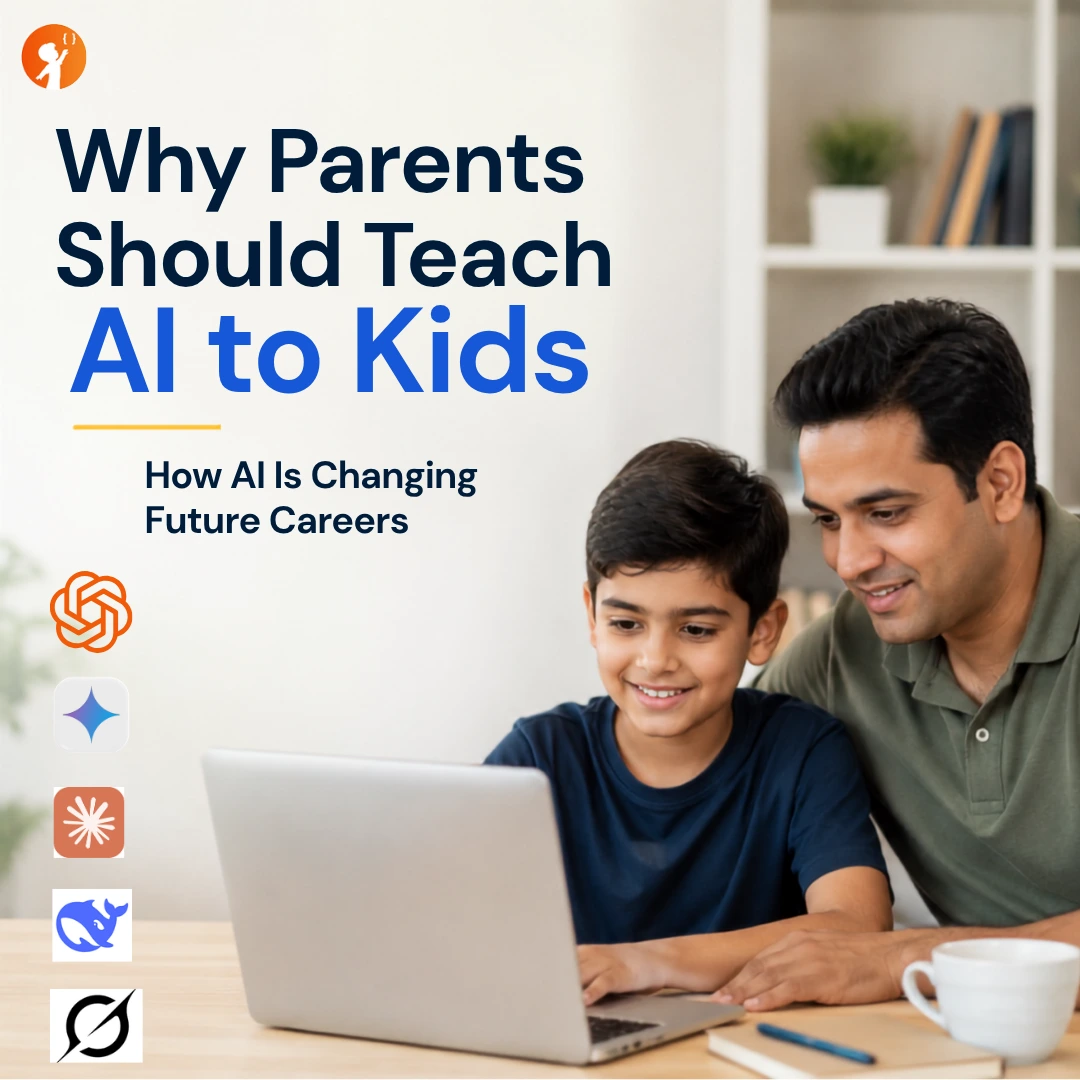
A few years ago, most parents were asking whether their children should learn to code. Today, a new question is becoming far more common: should you teach your child about AI?
Artificial Intelligence is already changing the way people work, learn, and communicate. From ChatGPT to smart assistants and self-learning systems, it has quietly become part of everyday life. That is why many experts believe understanding AI will soon be as important as understanding computers themselves.
The goal isn’t to turn every child into an AI engineer. It’s to help children understand the technology shaping their future — and feel confident using it. If you’re just beginning to explore AI for kids, this guide walks you through why it matters and how to start.
How AI Is Already Part of Your Child’s Everyday Life
Here’s something many parents don’t realise: your child is already using AI every single day. They just don’t call it that.
- ChatGPT and similar tools help with homework questions, ideas, and explanations.
- YouTube recommendations decide which videos appear next based on what your child watches.
- Netflix recommendations suggest the next show the whole family might enjoy.
- Google Search uses AI to understand what people really mean when they type.
- Voice assistants like Alexa, Siri, and Google Assistant answer questions and play songs on command.
- AI image generators turn a few typed words into full pictures and artwork.
So the real question isn’t whether your child will use AI. They already do. The question is whether they’ll understand how it works — or simply let it work on them. Teaching children how AI thinks helps them use it wisely, stay safe, and stay creative, instead of just clicking whatever the screen suggests.
Future Careers That May Grow Because of AI
No one can predict the future perfectly. But we can already see which jobs are growing fast. According to the World Economic Forum’s Future of Jobs Report 2025, around 170 million new jobs could be created by 2030, with technology and AI skills among the most in demand.
Many of these roles will involve working with AI, not against it. Here are some careers in technology that are expected to grow:
| Future Career | What They Do (in simple words) |
|---|---|
| AI Engineer | Builds the smart systems that power tools like chatbots and self-driving cars. |
| Machine Learning Specialist | Teaches computers to learn from data and get better over time. |
| Robotics Engineer | Designs and programs robots used in homes, hospitals, and factories. |
| AI Product Designer | Decides how AI apps look and feel so they’re easy and safe to use. |
| Data Scientist | Finds useful patterns in large amounts of information to help people make decisions. |
| Cybersecurity Specialist | Protects people, apps, and companies from online threats and hackers. |
| Software Developer | Creates the apps, websites, and games we use every day. |
The Skills Children Will Need in an AI-Powered Future
Here’s the reassuring part: preparing for an AI future isn’t only about technical ability. Some of the most important skills are deeply human — the kind AI can’t easily copy.
- Problem solving — breaking a big challenge into small steps and finding a way through.
- Creativity — AI can suggest ideas, but humans decide what’s original and worth making.
- Coding skills — the basic language behind every app and AI tool. A great place to start is helping kids learn coding through fun projects.
- Communication — explaining ideas clearly to both people and machines.
- Critical thinking — knowing when to trust an answer and when to question it.
- Adaptability — staying curious and willing to learn as tools keep changing.
How to Teach AI to Kids
You don’t need to be a tech expert to get your child started. Here’s a simple, step-by-step way to do it at home:
- Start with everyday examples. Point out AI when you see it — “Notice how Netflix knows what you like? That’s AI learning from you.”
- Let them explore safe AI tools together. Try a kid-friendly chatbot or image generator with them, and talk about how it works.
- Encourage creating, not just watching. Instead of endless videos, guide them toward making something. Here are some alternatives to YouTube that help kids build instead of just scroll.
- Begin coding early. Coding teaches the logical thinking behind AI. Younger kids can start with simple block coding; older ones can move on to Python.
- Talk about safety and honesty. Teach them that AI can make mistakes, and that copying answers isn’t the same as learning.
- Join a structured program. When you’re ready for real depth, a guided course makes a big difference — children can learn AI and machine learning step by step, at their own level.
The key is to keep it fun and pressure-free. Curiosity, not stress, is what keeps children learning.
How Junior Coderz Helps Students Prepare for the Future
Teaching AI at home is a great start. But many parents reach a point where they want expert guidance and a proper learning path. That’s where Junior Coderz comes in.
Meet Areesha — Real Projects, Built at Junior Coderz
The best way to understand what kids can build is to see it for yourself. Watch Areesha walk through the projects she created at Junior Coderz — proof of what your child could be making just a few months from now.
Our 18-month AI Hybrid Course is built for kids and teens. Students don’t just learn what AI is — they build real projects and explore new AI activities every month, so learning always stays fresh and exciting.
Beyond AI, students can grow across a full range of future-ready skills, including:
- Python — one of the most popular languages used in AI today.
- Robotics — bringing code to life in the real world.
- App Development — building apps from the ground up.
- Web Development — creating websites and understanding how the web works.
Every class is led by expert engineer trainers — real professionals who know the field and how to make it simple and fun for children. Lessons are age-appropriate and beginner-friendly, so no child feels left behind. And right now, our 2-month summer camp is running — a relaxed, low-pressure way for kids to explore AI and coding during the break.
Preparing Kids for Tomorrow Starts Today
Preparing your child for an AI future isn’t about pressure — it’s about exploration. Over two months, students can try AI, Virtual Robotics, Python, App Development, Web Development, and even 3D Modelling, and discover what genuinely excites them long before they ever have to choose a career.
Not sure if it’s the right fit? Book a free trial class and see how your child responds before committing.
Looking Ahead
The world your child grows into will look very different from today’s. AI will keep shaping future careers, the way we learn, and the way we live. Children who understand technology — and feel confident creating with it — will be ready to lead, not just follow.
Good AI education isn’t about rushing your child or adding pressure. It’s about opening doors, building confidence, and keeping curiosity alive. At Junior Coderz, the goal is simple: to help today’s kids become tomorrow’s creators, problem-solvers, and innovators — one fun, friendly lesson at a time.
Frequently Asked Questions
Yes, when used with guidance. With age-appropriate tools and adult support, AI becomes a powerful learning helper that builds skills for the future.
AI is already part of daily life, from search to entertainment. Knowing how to use it wisely helps kids stay safe, learn faster, and stay creative instead of just consuming content.
Many future careers will involve working alongside AI. Children who understand it early will have more opportunities and feel confident in a tech-driven workplace.
AI can personalise lessons, give instant feedback, support different learning speeds, make practice more engaging, and help teachers spend more time guiding students.
AI tools can explain tricky topics in simple ways, answer questions instantly, and adapt to a child’s level — making learning more interactive and less frustrating.