A few years ago, building anything with artificial intelligence felt like something only scientists could do. Not anymore. Today, kids can create their own chatbots, train computers to recognise pictures, and even build smart games — often without writing a single line of code.
The best part? These projects are genuinely fun. And when learning feels like play, kids stay curious and keep going.
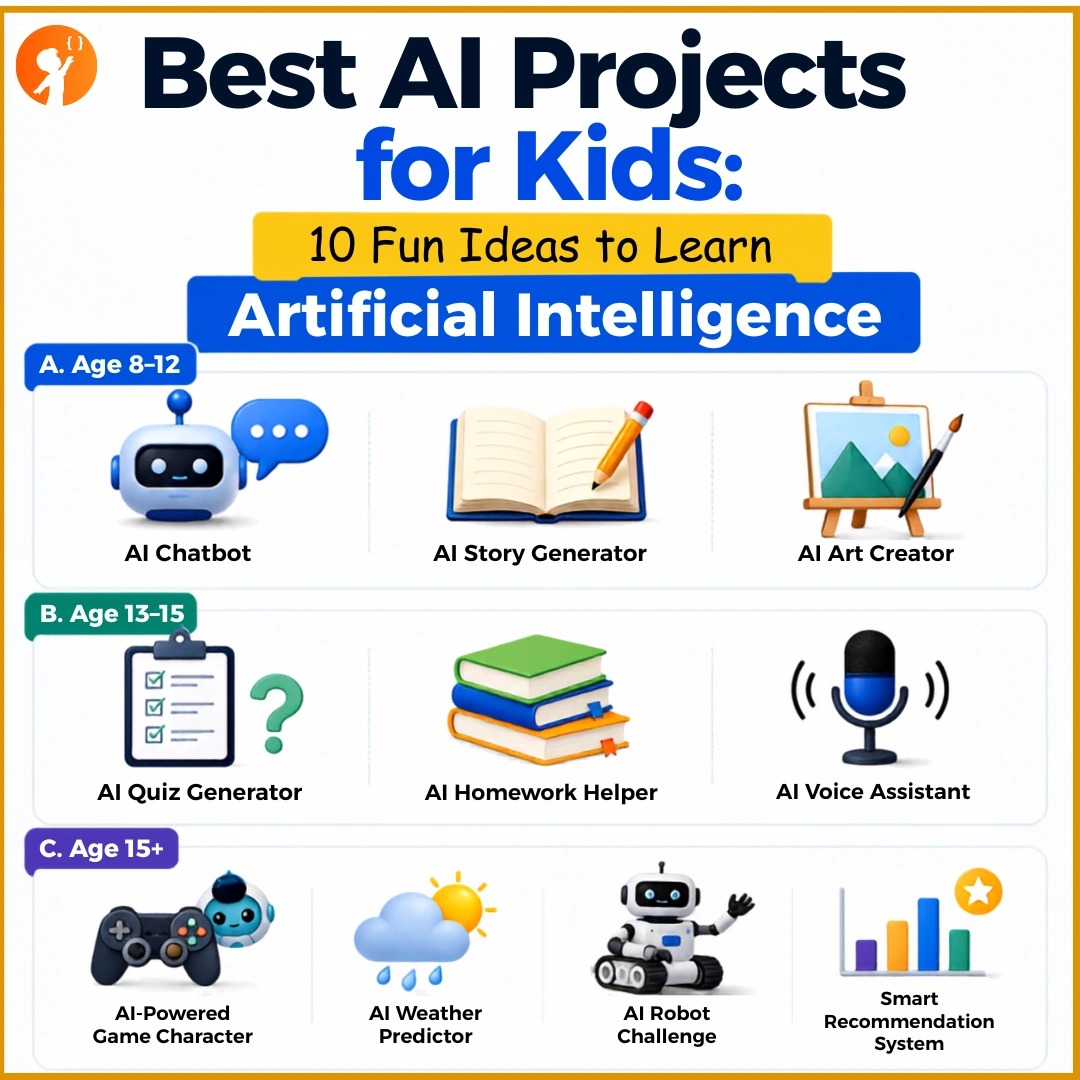
In this guide, we’ve gathered 10 of the best AI projects for kids, sorted by age so you can find the right starting point for your child. Whether your child is 8 or 15, these beginner-friendly ideas turn screen time into real learning. If you’re new to all of this, our guide on AI for kids is a helpful place to start too.
Why AI Projects Are Great for Kids
AI projects do far more than keep children busy. They teach skills that matter for school, life, and future careers — all while kids think they’re just having fun. Project-based learning sticks because children create instead of just watching.
Here’s what hands-on AI activities actually build:
| What Kids Gain | Why It Matters |
|---|---|
| Problem-solving | Kids learn to break big challenges into small, doable steps. |
| Creativity | They turn their own ideas into real, working projects. |
| Logical thinking | Building AI teaches cause and effect — “if this, then that.” |
| Confidence | Finishing a real project shows kids they can do hard things. |
| Future-ready skills | AI and coding are becoming as important as reading and maths. |
| Curiosity about tech | Kids stop just using technology and start understanding how it works. |
If you’d like to understand the bigger picture first, our post on how to teach AI to kids explains why these skills are becoming so important for future jobs.
3 Best AI Projects for Kids (Age 8–12)
For children aged 8 to 12, the goal isn’t complicated code — it’s sparking wonder. The magic at this stage happens when a child sees an idea in their head turn into something real on screen in just a few minutes. These three projects use friendly, mostly no-code tools, so there’s almost no learning curve and very little that can go wrong.
1. AI Chatbot
What it is: Kids build a simple chatbot that can answer questions, tell jokes, or chat about a favourite topic — using easy, kid-friendly tools.
What kids learn: How computers understand language, and how to give clear instructions so a machine responds the right way.
2. AI Story Generator
What it is: Children type a few ideas — characters, a setting, a problem — and use an AI tool to help create a fun, original story.
What kids learn: How AI works with human imagination, and why their own creative ideas are still the most important part.
3. AI Art Creator
What it is: Kids turn words into pictures using a safe AI art tool, designing characters, scenes, or wild imaginary creatures.
What kids learn: How AI “understands” descriptions, and how small changes in their words change the final artwork.
These projects are perfect first steps — and they pair beautifully with simple coding. If your child is also ready to start coding, here’s how to help kids learn coding the right way.
3 Best AI Projects for Kids (Age 13–15)
By 13 to 15, most kids are ready for a bigger challenge. They’ve outgrown simple point-and-click tools and want to build things that feel genuinely useful. These projects bring in a little logic and light coding, and they centre on solving real problems — the kind of work that helps teens see technology as something they can shape, not just consume.
4. AI Quiz Generator
What it is: Teens build a tool that creates quiz questions on any topic — perfect for studying or challenging friends.
What kids learn: How AI organises information and generates content, plus the basics of designing something other people will use.
5. AI Homework Helper
What it is: Students design a smart helper that explains tricky topics in simple words — while learning to use AI honestly, as a guide rather than a shortcut.
What kids learn: How AI can support learning, and the difference between understanding an answer and just copying one.
6. AI Voice Assistant
What it is: Teens create a basic voice assistant that can answer questions, set reminders, or play music on command.
What kids learn: How machines turn speech into actions, and how voice technology like Siri and Alexa really works.
Projects like these are a great reason to move kids away from endless scrolling. Here are some smart alternatives to YouTube that help teens build instead of just watch.
4 Best AI Projects for Kids (Age 15+)
Older teens are ready for the real thing — actual coding challenges that mirror how AI is built professionally. These projects lean on Python, one of the most widely used languages in AI today, and introduce core ideas like data, patterns, and machine decision-making.
7. AI-Powered Game Character
What it is: Teens code a game character that “thinks” — reacting to the player and making its own simple decisions.
What kids learn: How AI is used in real games, and how to combine coding with creative game design.
8. AI Weather Predictor
What it is: Students build a program that looks at past weather data and predicts what might happen next.
What kids learn: How AI finds patterns in data to make predictions — the same idea behind real forecasting and data science.
9. AI Robot Challenge
What it is: Teens program a robot (real or virtual) to complete tasks like following a path or sorting objects.
What kids learn: How code controls machines in the real world, blending robotics, logic, and problem-solving.
10. Smart Recommendation System
What it is: Students create a mini version of the system that suggests videos or songs — like the ones used by YouTube and Netflix.
What kids learn: How AI studies choices to recommend things, and how the apps they use every day actually work.
Get All 10 Projects in One Handy Pack
We’ve put every project into a free, printable PDF — with step-by-step guides for each one and starter code for the Python projects. Print it, keep it on the fridge, and let your child work through them at their own pace.
How Kids Can Learn AI Step by Step
AI can feel huge, but kids don’t need to learn it all at once. Here’s a simple path that works:
- Start with curiosity. Point out AI in daily life — recommendations, voice assistants, smart cameras.
- Try a no-code project first. Begin with an AI art tool or chatbot so your child sees a quick, fun result.
- Learn the basics of coding. Block coding for younger kids, then Python as they grow.
- Build small projects. Each finished project builds confidence for a bigger one.
- Add real challenges. Move toward image recognition, data, and game projects over time.
- Get expert guidance. A structured course keeps kids progressing instead of getting stuck.
How Junior Coderz Helps Kids Build AI Projects
Trying projects at home is a wonderful start. But many parents reach a point where they want a clear path and expert support — and that’s where Junior Coderz comes in.
See What Our Students Actually Build
Watch a quick showcase of real projects built by Junior Coderz students — games, apps, AI tools, and more. It’s the best proof of what your child could be making in just a few months.
Across our courses, learning is built around doing. After a few months of lessons, students put their skills into action with real, hands-on projects — so they’re not just memorising ideas, they’re building things they’re proud of. Our classes are led by expert engineer trainers who make even tricky topics simple and fun.
Here’s how students get hands-on with AI and technology:
- AI and machine learning projects — kids build smart projects step by step, guided by mentors.
- Python projects — students create chatbots, games, and data projects with the same language real AI engineers use.
- Web development projects — kids learn to design and build their own websites from the ground up.
- Coding competitions — a favourite! Students get a project brief and a time limit, then build their solution. Winners are ranked and earn prize rewards — a fun, motivating way to learn under friendly pressure.
Not sure if it’s the right fit? You can book a free trial class and see how your child responds before deciding. Just contact us and we’ll help you get started.
Start Building With AI Today
Your child doesn’t need to be a genius — or even know how to code yet — to start exploring AI. All it takes is one fun project and a little curiosity. Pick any idea from this list, try it together this weekend, and watch how quickly they get hooked.
And when they’re ready to go further, Junior Coderz can turn that curiosity into real, future-ready skills — one fun project at a time.
Frequently Asked Questions
Yes! With age-appropriate tools, kids as young as 8 can build simple AI projects. Many require no coding at all, making AI easy and fun to explore.
For young children, AI is best explained simply: it’s a computer that learns and makes choices, like a voice assistant that answers questions or a camera that recognises faces.
Many kid-friendly tools are free to start, such as Google’s Teachable Machine and Machine Learning for Kids. Always check that a tool is age-appropriate and used with adult supervision.
The best AI tools for kids are safe, simple, and creative. No-code platforms made for children are ideal for beginners, while guided classes like those at Junior Coderz help kids go further safely.
Yes, especially with expert guidance. Structured classes give kids real projects, feedback, and a clear path — turning casual interest into lasting skills. Junior Coderz offers a free trial so you can see the value first.