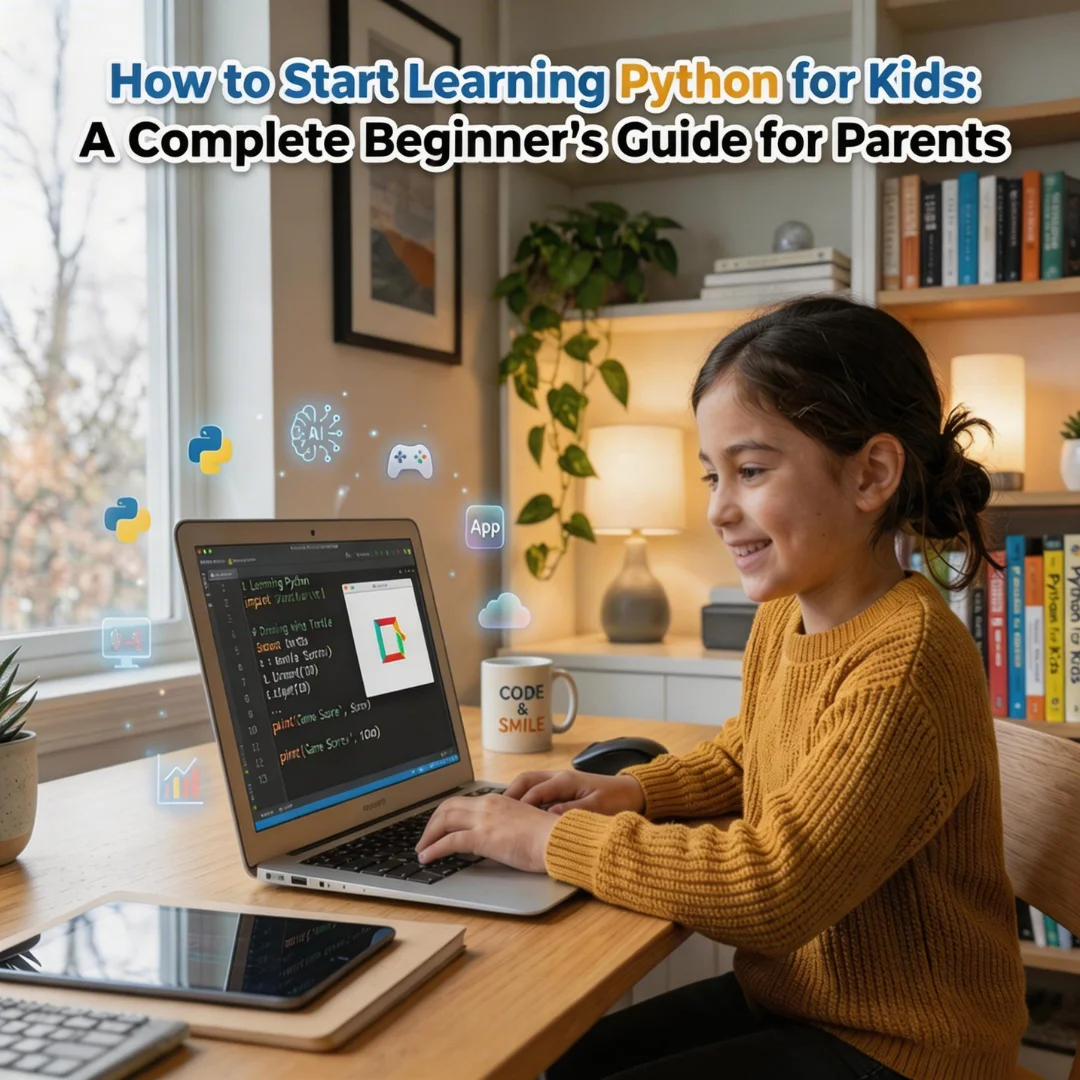
As a parent, you want what’s best for your child and their future. In today’s technology-driven world, one of the best skills you can give them is how to code. But when you start searching, it can quickly get confusing: Should we go with Python? Which platform? Is my child even old enough to start?
If you’ve asked yourself these questions, you’re not alone — parents often feel overwhelmed when they first look into helping their kids learn to code. This step-by-step guide covers everything you need to know about Python for kids.
Why Python for Kids Is a Smart Choice Today
Python is recommended by schools, coding programs, and tech professionals worldwide as the best first programming language for kids. Unlike languages that force children to memorise difficult syntax, Python is extremely readable — its syntax reads almost like plain English, so kids understand what they’re doing instead of wrestling with complicated rules.
Python also powers many of your child’s favourite apps — YouTube, Instagram, Spotify, and plenty of games are built with it. So by learning Python, your child is learning the very same language used by professional developers everywhere.
| Skill | Why It Matters |
|---|---|
| Problem-solving | Helps kids think logically and break big challenges into small steps |
| Creativity | Lets them build their own games and projects |
| Confidence | Finishing real projects boosts self-belief |
| Future skills | Prepares them for tech-driven careers |
That first skill is the big one: coding is one of the best workouts there is for the problem-solving skills that help children in every subject.
Is Python Hard to Learn for Kids?
This is the number-one question parents ask us, and the honest answer is: no, Python is not hard — not even for kids. It was designed to be simple and readable. Where languages like Java and C++ are packed with symbols, brackets, and hard-to-read rules, Python keeps things clean. Here’s what the simplest program looks like — one that makes the computer say hello:
One line of code, and you’re done. No complicated setup, and kids see instant results — which shows them that programming actually works and leaves them hungry to learn more.
What Is the Right Age to Start Learning Python?
There’s no single perfect age, but most experts agree children from around age 8 can begin exploring Python in a fun, structured way. Here’s a simple age breakdown to help you decide:
- Ages 7–10 — best suited to visual, block-based tools. Kids learn logic through games and pick up the basic concepts.
- Ages 11–14 — the sweet spot for starting Python. Kids can handle text-based coding and begin creating simple projects.
- Ages 14+ — teens can move into advanced topics like app development, automation, AI, and even competitive programming such as USACO.
How to Learn Python for Kids (Step-by-Step)
If you want to know how a beginner should learn Python, here’s a simple path to follow. Stick to this order and you’ll be surprised how quickly your child progresses.
- Learn the basics. Understand what variables are, what loops do, and how conditions work — the building blocks of every program. Focus on understanding concepts, not memorising code.
- Work on small projects. Get hands-on early. Build a calculator, a number-guessing game, or a quiz. Mastering small Python projects for beginners builds real confidence.
- Build real projects. Apply what you’ve learned to projects your child is genuinely excited about — a game, a chatbot, an app they’re proud of. Learning by building teaches far more than theory alone. (Our best AI projects for kids are full of ideas.)
- Take a guided course. Real progress comes from a structured path and expert mentors who teach the right thing at the right time, keep your child on track, and answer their questions. Here’s what to expect in a first class.
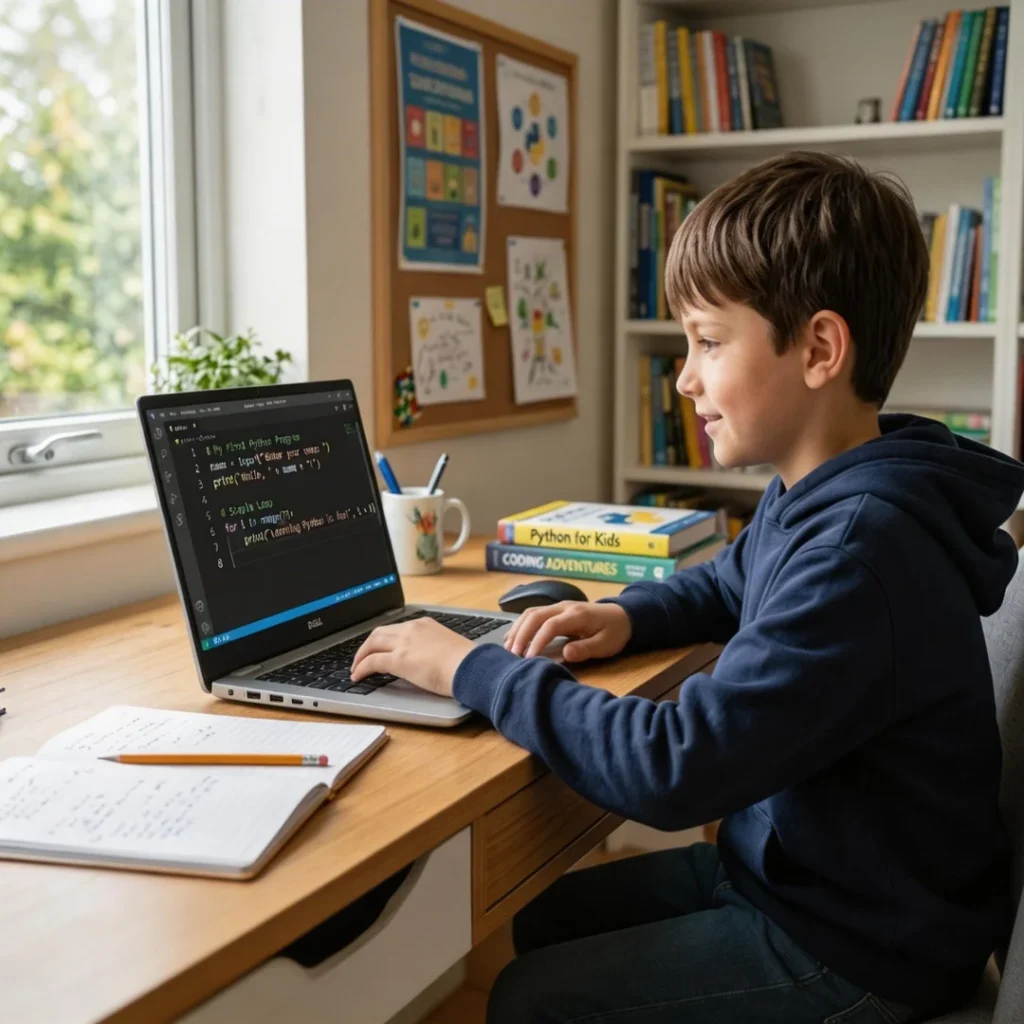
How Long Does It Take to Learn Python?
Another top question from parents is how long it takes. It depends on the child’s age, consistency, and quality of instruction, but here’s a realistic timeline:
| Level | Typical Time |
|---|---|
| Beginner | 2–4 weeks |
| Intermediate | 2–3 months |
| Advanced | 6+ months |
What Can Kids Build With Python?
This is where it gets exciting for kids and parents alike. Python is incredibly versatile, so the possibilities are almost endless. Here are some real, inspiring things kids build with it:
- Games — simple games like Pong, quizzes, or obstacle challenges, all while learning logic and creativity.
- Chatbots — programs that answer questions or perform tasks, like their own simple Python AI chatbot.
- Calculator programs — tools for basic maths, grades, or even a password generator; here’s how to build a simple Python calculator.
- Mini apps — small, useful tools like quiz apps and to-do lists, a natural bridge into app development.
How Junior Coderz Helps Kids Learn Python
At Junior Coderz, we’ve built a learning environment designed specifically for young coders, based on a simple idea: kids learn best when they’re building something they’re proud of. From complete beginners to advanced coders, we offer a clear path that grows with your child. Every lesson is hands-on, every project is meaningful, and every student gets the attention they deserve.
Make Coding Click for Your Child
Your child has the potential to build amazing things with Python. All they need is the right guidance, the right environment, and a little encouragement from you. Junior Coderz is ready to take them from their very first line of code to real, exciting projects they’ll be proud of.
To Conclude
Python is one of the best gifts you can give your child in today’s technology-driven world. It’s beginner-friendly, endlessly creative, and opens doors to exciting future careers. With the right approach, your child can go from complete beginner to confident coder faster than you might think. And with a trusted platform like Junior Coderz guiding every step, you can feel confident they’re learning the right way.
Frequently Asked Questions
The best way is a step-by-step approach that starts with simple concepts and then moves into building small games or apps — learning by doing, with guidance to keep them on track.
It means that by learning the 20% of Python concepts that are used most often, you can handle about 80% of what you’ll actually need — a smart way for kids to focus their early learning.
Yes. A 10-year-old can comfortably learn Python — at this stage children can follow logic, understand instructions, and build simple projects with confidence.
ChatGPT can help by explaining concepts, giving examples, and solving problems — but it works best alongside a structured course and adult guidance. Here’s our take on whether ChatGPT is safe for kids.