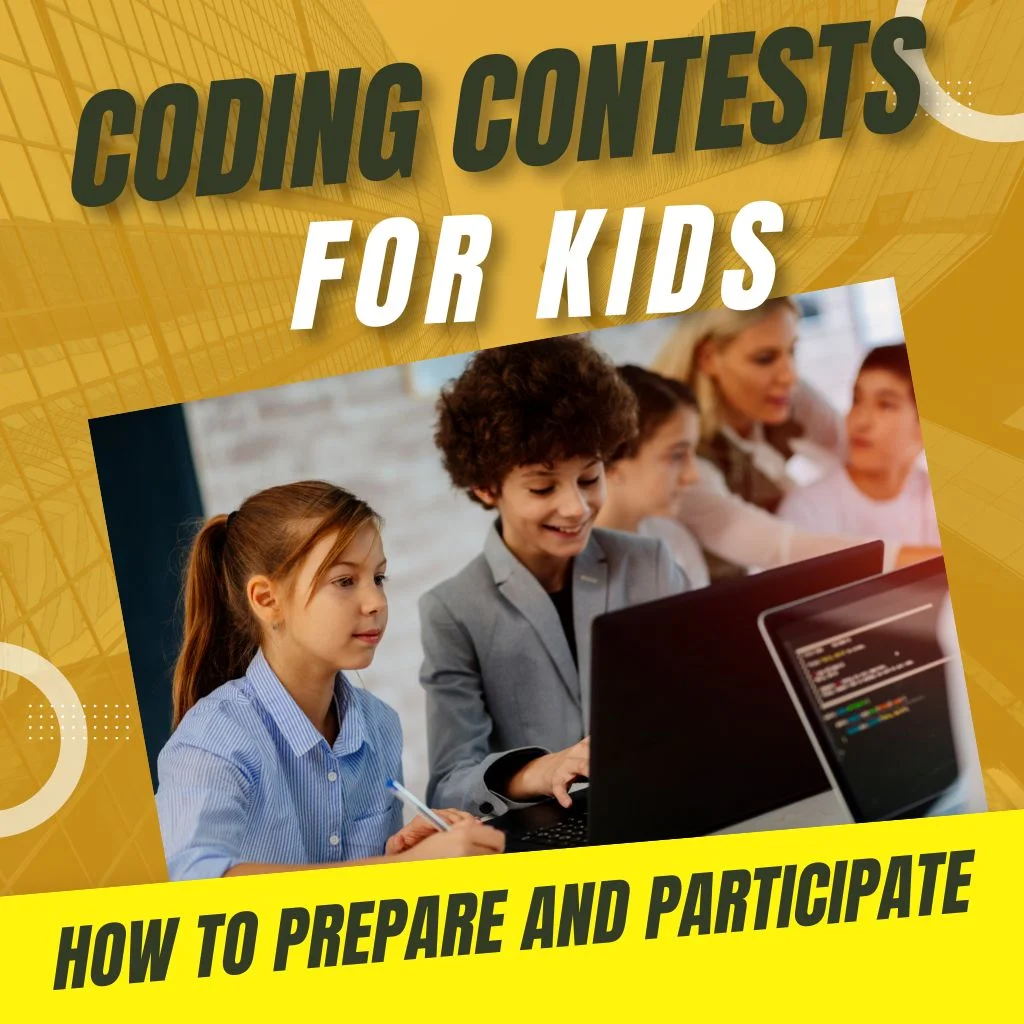
In today’s tech-driven world, coding contests are no longer just for professional programmers. They’ve become an exciting gateway for kids to explore creativity, sharpen logic, and showcase their digital talents on a global stage. These competitions are more than just battles of brains; they build resilience, spark innovation, and ignite lifelong passions for STEM fields.
But what if your child could not only join these contests but also win them with confidence? What if you had a clear roadmap, insider tips, and access to the best coding competition sites all in one place? In this guide, you’ll uncover hidden gems of the coding world, preparation blueprints, and real strategies to help your child rise above the rest. Ready to unlock the next level of their tech journey? Let’s dive into the world of coding contests and how your junior coder can conquer them.
What Are Coding Contests?
Coding contests, also known as coding competitions, are timed programming challenges where kids solve logical puzzles, build apps or games, and often compete nationally or globally. Some are solo-based; others are team-oriented and judged by creativity, functionality, and execution. From algorithmic problems to game-based hackathons, these contests help kids develop critical skills in:
- Logical Thinking and Problem-Solving
In coding contests, kids are presented with challenges that require them to analyze problems, find patterns, and create efficient solutions. This helps sharpen their logical reasoning skills and teaches them how to break down complex tasks into manageable steps, an essential ability not just in programming but in real-life situations too.
- Time Management
Most coding competitions are timed, which teaches kids how to work under pressure. They learn to prioritize tasks, pace themselves, and avoid spending too much time on a single problem. These skills become incredibly useful in academics and future work environments where deadlines matter.
- Coding Language Fluency (Scratch, Python, Java, etc.)
As participants engage with contests, they naturally become more fluent in programming languages. Whether they’re using visual languages like Scratch or text-based ones like Python and Java, they gain hands-on experience that strengthens their syntax understanding, logic building, and creative expression.
- Team Collaboration and Communication
Many coding contests involve team projects, encouraging kids to collaborate, delegate tasks, and communicate their ideas clearly. These experiences teach valuable social and leadership skills, fostering cooperation and adaptability traits essential for success in any career path.
Top Upcoming Coding Contests for Kids (2025–2026)

Here are some exciting upcoming coding contests your child can join based on age and skill level:
1. Bebras Challenge
The Bebras Challenge is an internationally recognized computing competition designed for students aged 8 to 14. It introduces kids to the principles of computational thinking through short, logic-based puzzles that are both fun and educational. The contest is conducted online, making it accessible to classrooms and homeschoolers alike, and no prior programming knowledge is required. It encourages critical thinking, pattern recognition, and creative problem-solving perfect for children just stepping into the world of coding. The Bebras Challenge is held annually in November, and with its gamified format and multiple difficulty levels, it’s a fantastic way to get young minds excited about coding from an early age.
2. Google Code-In / Code Jam Junior
Google Code-In (now expected to relaunch as Code Jam Junior) is a global, project-based competition targeted at teens aged 13 to 17. Unlike traditional coding contests, this one focuses on real-world open-source development. Participants contribute to actual software projects under mentorship from professional developers, using platforms like GitHub and programming languages such as Python or Java. Students complete bite-sized tasks like writing code, fixing bugs, and creating documentation. The hands-on experience with open-source tools and collaborative environments gives participants a unique edge in coding maturity. The contest is anticipated to return in Spring 2026, offering a powerful opportunity for older kids ready to take their skills beyond the classroom.
3. FIRST LEGO League (FLL)
The FIRST LEGO League (FLL) is a prestigious STEM competition that fuses robotics, innovation, and teamwork. Designed for children aged 9 to 14, FLL requires teams to build and program autonomous robots using LEGO kits and Scratch-based coding platforms to complete specific real-world missions on a themed playing field. More than just a coding competition, FLL challenges participants to think like engineers and problem-solvers, fostering a blend of creativity and technical know-how. Teams also present research projects that address real societal issues, integrating communication and presentation skills into the experience. Regional events take place throughout the year, with many leading to national and international championships. FLL is perfect for young coders who love to build and innovate collaboratively.
4. American Computer Science League (ACSL)
The American Computer Science League (ACSL) is a long-standing and highly regarded coding competition for students aged 11 and above. Structured into divisions like Elementary, Junior, Intermediate, and Senior, it offers a progressive challenge based on skill level. ACSL contests involve algorithmic thinking, logic problems, and programming tasks, making it ideal for students with some prior exposure to coding. It runs across four rounds from November to May, giving participants consistent practice over several months. The competition is popular among schools and coding academies and is known to boost students’ analytical and programming abilities. It’s also a great resume builder for students aiming for advanced STEM education, as it’s well recognized by universities and computer science departments.
5. Scratch Olympiad
The Scratch Olympiad is an imaginative and beginner-friendly competition tailored for young creators aged 7 to 13. Hosted globally, this event invites children to submit original projects built using Scratch, the visual programming language developed by MIT. Participants can design interactive stories, games, animations, and even educational tools—limited only by their creativity. The competition emphasizes not just technical ability, but also design, storytelling, and presentation. With a flexible format and global participation, the Scratch Olympiad is an ideal starting point for kids who love to code visually and express themselves through digital media. The upcoming event is scheduled for Summer 2026, and it’s a wonderful platform for children to showcase their creativity on an international stage.
Pro Tip: Bookmark these best coding competition sites to stay updated:
- https://bebraschallenge.org
- https://www.firstlegoleague.org
- https://acsl.org
- https://scratch.mit.edu
How to Prepare for Coding Contests Like a Pro
1. Choose the Right Competition
Every child has a unique coding journey, so it’s important to align the competition with their current age, interest, and skill level. For example, a 7-year-old just starting out may enjoy the creative freedom of the Scratch Olympiad, while a more advanced 13-year-old might thrive in structured algorithmic contests like ACSL. Choosing a competition that’s too advanced can lead to frustration, while one that’s too easy may not feel challenging or rewarding. Evaluate the contest format (puzzle-solving, project-based, or team challenge), supported languages (Scratch, Python, Java), and available practice resources. Matching the child to the right competition helps them stay engaged, confident, and motivated throughout the experience.
2. Use Trusted Learning Resources – Only from JuniorCoderz
To prepare effectively for coding contests, your child needs structured, consistent practice using reliable resources that are designed for their age and experience level. At JuniorCoderz, we offer a complete learning environment tailored for young coders from beginners using visual blocks to advanced learners writing full scripts in Python or Java.
Our platform provides age-specific coding courses, interactive challenges, and real-time feedback, all built with contest readiness in mind. Kids don’t just learn how to code, they learn how to solve problems under pressure, manage their time during coding tasks, and think logically and creatively.
3. Build a Practice Schedule
Consistency is key. Here’s a sample weekly schedule:
| Day | Focus |
| Mon | Logic puzzles (20 mins) |
| Tue | Language syntax (30 mins) |
| Wed | Previous year questions |
| Thu | Mini project or game |
| Fri | Mock contest (timed) |
| Sat | Review and improvement |
| Sun | Fun: Code with a friend |
4. Join a Coding Club or Class
At JuniorCoderz, we offer structured live coding sessions, interactive workshops, and mentorship programs that go beyond traditional learning. By joining our coding club, kids experience a real contest-like environment where they work on timed challenges, group projects, and problem-solving exercises. These classes help them build teamwork, communication, and leadership skills, which are crucial for coding competitions that require collaboration. Our expert mentors guide students through every step teaching not just the “how” of coding but also the “why,” boosting their confidence and creativity for upcoming contests.
5. Analyze Past Winners
JuniorCoderz helps students learn from the success stories of past contest winners by analyzing what makes their projects stand out whether it’s clean and efficient code, innovative features, or compelling storytelling through design and UI. We provide students with examples, walkthroughs, and project breakdowns of top-performing entries so they can understand the judging criteria and apply those strategies in their own work. This insider knowledge helps kids not just participate but excel in every coding contest.
Real Story: From Scratch to Gold Medal
Last year, Rayan, a 12-year-old JuniorCoderz student, participated in the Bebras Challenge for the first time. He began with zero coding experience. With a guided weekly plan and mentorship, he not only solved logic puzzles confidently but also ranked in the top 5% in his category.
What made the difference? Daily challenges, personalized feedback, and believing he could do it.
Your child could be next.
Pro Tips to Boost Your Child’s Contest Performance
- Encourage pair programming with friends or classmates
- Teach them to break problems into smaller steps
- Use online sandboxes to test code without errors
- Don’t focus on winning, focus on learning and showing up
JuniorCoderz Can Help!
At JuniorCoderz, we prepare kids not just to code, but to compete with creativity. Our coaches and custom prep modules ensure your child is ready—mentally, technically, and emotionally. With us, learning is fun, structured, and goal-oriented.
Whether they aim for a medal or just want to try their first coding competition, we’re here every step of the way.
Final Thoughts: Let the Fun Begin!
Coding contests unlock a whole new world of discovery, growth, and excitement for your child. Whether they’re a curious beginner or a rising junior coder, these competitions offer more than medals—they build character, confidence, and creativity. Don’t wait for “someday.” Let them shine now.
Sign up at JuniorCoderz.com and start their coding journey today!
FAQs
Q: What age should my child start participating in coding contests?
Ages 7+ is great to start, especially with visual coding like Scratch.
Q: Are there any free coding contests for kids?
Yes! Bebras, Scratch Olympiad, and some ACSL tiers are free or very low-cost.
Q: Do I need to teach my child coding before signing them up?
Not necessarily. Many contests offer beginner levels and we can help bridge the gap.
Q: How can I keep my child motivated during prep?
Celebrate small wins, show their progress, and connect them with coding buddies.
Q: Can they participate in more than one contest?
Absolutely! Just pace them based on interest and avoid back-to-back overload.