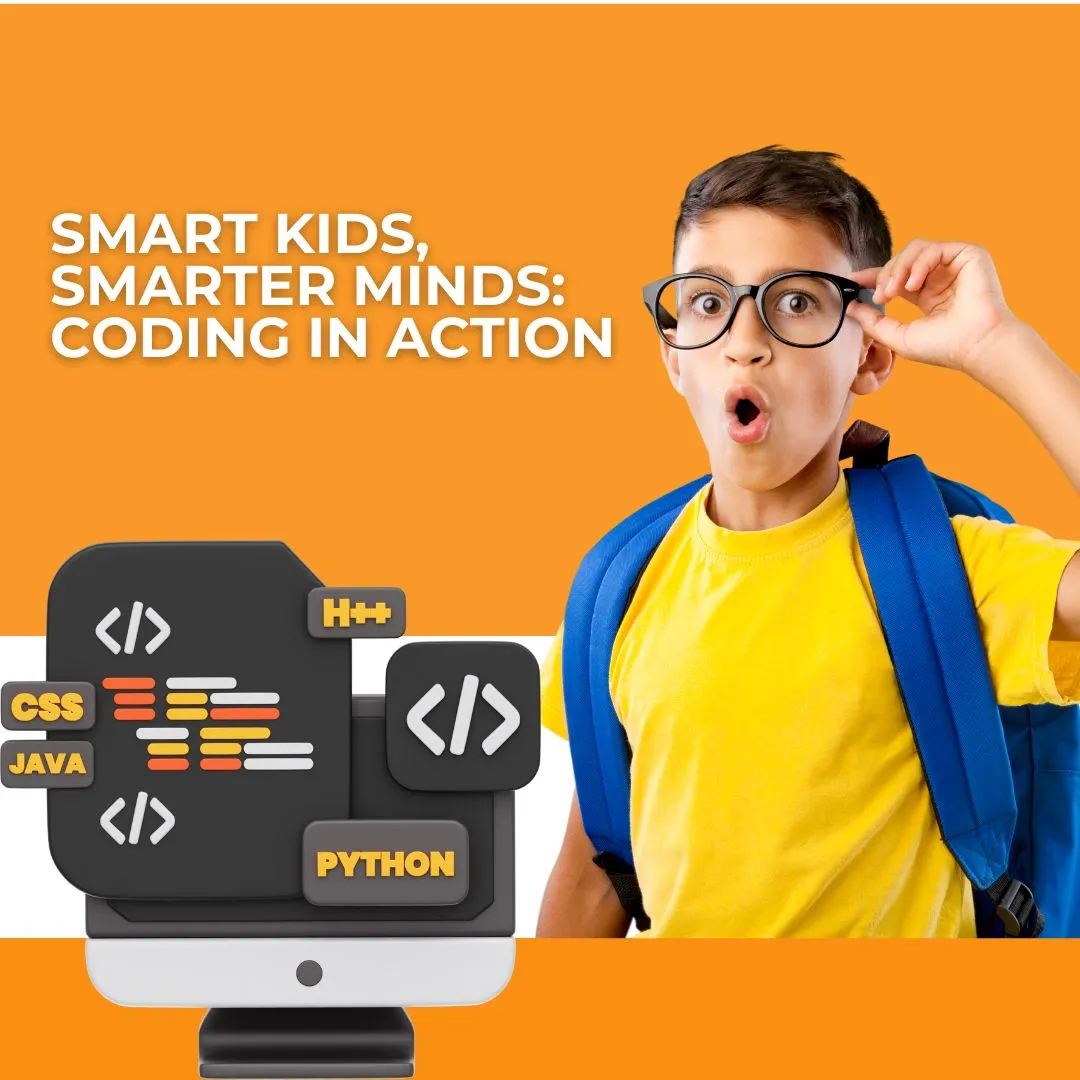
Coding builds critical thinking skills. It is far more than typing commands on a screen it’s a powerful way to train young minds. When children learn to code, they develop problem-solving abilities, creativity, and logical thinking that extend well beyond computers. Coding teaches kids how to break down complex tasks into smaller, manageable steps while exploring multiple solutions. These skills create a strong foundation for success in school, future careers, and everyday life. At Junior Coderz, we help children turn coding into a fun and practical way to sharpen their thinking and reasoning skills.
1️- Encourages Logical Reasoning and Sequencing
Coding teaches kids to think in order, step by step, building strong logical skills. When children code, they organize commands and follow sequences, learning how one action affects the next. Debugging a program trains them to identify mistakes, test solutions, and improve results — all while strengthening reasoning and patience. This structured approach helps them in school, everyday decision-making, and other problem-solving tasks.
Learning to code also encourages kids to plan before acting. They must anticipate what their program will do at each step, which improves foresight and careful thinking. Coding challenges often require multiple steps to succeed, teaching children to handle tasks systematically. This step-by-step approach improves their attention to detail and teaches them to prioritize important actions logically.
Tip: Encourage your child to explain their code sequence aloud it strengthens logical reasoning and helps them understand cause and effect clearly.

2️- Promotes Problem Decomposition
Large challenges can feel overwhelming, but coding builds critical thinking skills by teaching kids to divide problems into smaller, manageable steps. Children learn to approach a big task by focusing on one component at a time, making problem-solving less intimidating. This skill transfers to real life, helping them stay calm and organized when facing difficult situations. Practicing decomposition also improves planning, analytical thinking, and confidence.
Another benefit of problem decomposition is that it enhances project management skills. Kids learn to set mini-goals, track progress, and adjust strategies when needed. This builds independence and empowers them to take ownership of complex projects. Over time, children become more systematic and methodical in their thinking, which benefits both coding and real-life challenges.
Example: When building a game, a child might first plan the main character’s movement, then design obstacles, then add background elements learning to simplify complexity into actionable parts.
3️- Strengthens Pattern Recognition
Patterns are everywhere in coding, from loops and functions to recurring logic structures. By spotting these patterns, children learn to predict outcomes, reuse solutions, and think ahead strategically. Pattern recognition also improves analytical thinking and helps kids connect ideas across different subjects like math, science, and robotics. Over time, they develop the ability to anticipate results and approach challenges efficiently.
Regular coding practice also trains memory and attention to detail. Kids learn to remember how patterns work and apply them to new problems, building mental flexibility. Recognizing coding patterns allows them to solve problems faster and with fewer errors. This skill also fosters a sense of confidence when facing tasks that initially seem complicated or unfamiliar.
“Pattern recognition is the heart of problem-solving the better you see it, the faster you solve it.”
4️- Builds Abstract Thinking and Conceptualization
Coding encourages children to imagine solutions before creating them, fostering abstract thinking. They learn about algorithms, data structures, and logic flows, which train their minds to plan and conceptualize. Visualizing how a program or game will behave strengthens problem-solving skills and helps kids think creatively. Abstract thinking also develops strategic planning and innovation skills that will serve them well in any STEM field.
Additionally, coding teaches cause-and-effect relationships in abstract scenarios. Children must predict how their code will execute and consider multiple variables at once. This type of thinking helps them understand more complex concepts in math and science later. Abstract thinking through coding also builds confidence in reasoning about unseen or hypothetical situations.
Tip: Ask your child to sketch their program’s flow or game idea before coding visualizing the steps enhances abstract reasoning.
5️- Develops Persistence and Growth Mindset
Coding teaches kids that mistakes are part of learning and growth. Bugs and errors help them develop resilience, patience, and perseverance as they debug and improve their projects. Children learn to view challenges as opportunities rather than failures, which strengthens self-confidence. This growth mindset transfers to academics, sports, and everyday life, helping them face obstacles without fear.
Persistence in coding also fosters self-motivation and discipline. Kids learn that success comes from consistent effort rather than instant results. They develop the habit of trying multiple solutions and refining strategies until they succeed. This mindset becomes a lifelong skill that applies to school, hobbies, and personal goals.
“Every error is a step closer to success.”
6️- Boosts Creative Problem-Solving
Coding combines logic and creativity, allowing kids to explore multiple ways to achieve a goal. When creating games, apps, or animations, they experiment with different solutions, learning to adapt and innovate. This encourages flexible thinking and teaches them that challenges can have more than one solution. Kids also gain confidence in designing original ideas and applying logical reasoning to make them work.
Additionally, coding develops innovative thinking through experimentation. Children learn to test new approaches, evaluate results, and improve their methods. This trial-and-error process strengthens both imagination and analytical skills. Over time, kids become capable of finding unique solutions to problems in creative and practical ways.
Example: While building an animation, a child may use different commands or sequences to achieve the same effect learning design thinking and creative problem-solving simultaneously.
7️- Enhances Decision-Making and Analytical Thinking
Every coding task involves choices, from selecting commands to predicting outcomes. Coding builds critical thinking skills by helping children develop analytical thinking as they test options, compare results, and refine strategies. These decision-making skills extend beyond coding into academics, teamwork, and daily life situations. Coding teaches kids to think ahead, evaluate risks, and solve problems logically and efficiently.
Coding also encourages reflective thinking, where kids analyze what worked, what didn’t, and why. They learn that coding for kids critical thinking involves evaluating multiple possibilities before making a choice. This strengthens judgment and prepares them to face complex challenges confidently. It also enhances planning skills, as children anticipate consequences and refine their approach step by step.
Tip: Encourage kids to review alternative coding solutions and discuss why one approach works better it strengthens decision-making skills.
Real-Life Examples of Coding & Critical Thinking
Debugging a Website: Kids learn patience, analysis, and structured thinking as they identify and fix errors.
Designing a Game: They practice logical reasoning, pattern recognition, and creative problem-solving.
Collaborating on Projects: Group coding projects teach communication, teamwork, and analytical thinking — skills that go far beyond coding.
“Good programmers write code; great programmers solve problems.” – Cory House
FAQs
Q- How does coding help kids think critically?
It teaches structured thinking, problem decomposition, and analysis, strengthening logical reasoning skills.
Q- At what age should kids start coding?
Children can start as early as 6 with block-based platforms like Scratch, building comfort with logical structures early.
Q- How can coding be fun?
Through interactive projects, games, and storytelling, kids enjoy learning while developing problem-solving skills.
Q- How does debugging improve problem-solving?
Debugging trains patience, logical analysis, and persistence, teaching kids to learn from mistakes.
Q- Can coding improve academics?
Yes, it strengthens math, reading, focus, and structured thinking — all of which enhance school performance.
Q- How does coding relate to STEM learning?
Coding integrates Science, Technology, Engineering, and Math into creative problem-solving activities.
Q- Why choose Junior Coderz?
We provide project-based, hands-on coding programs that help kids build critical thinking, creativity, and confidence while having fun.