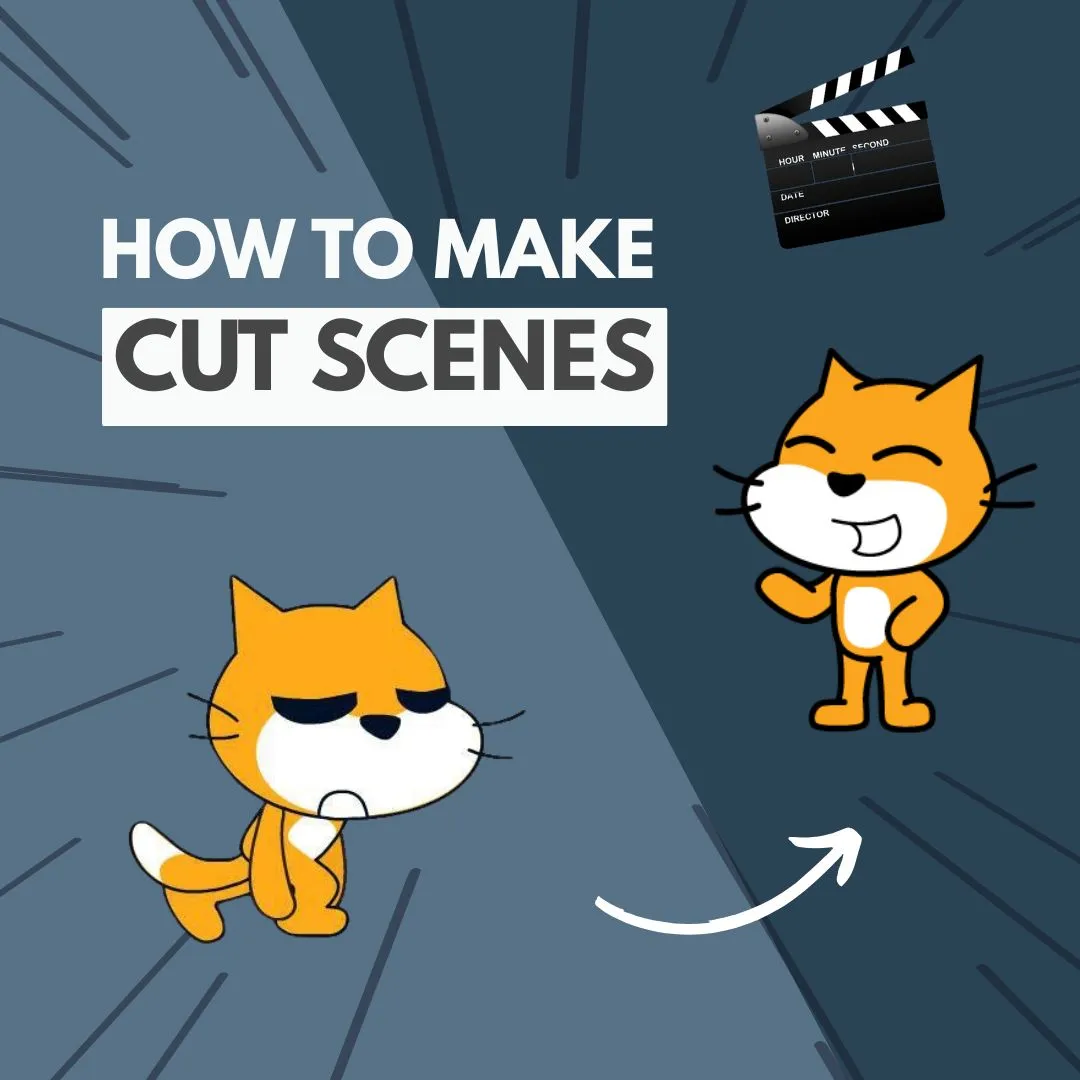
Stories make games memorable. A character speaking before an adventure starts, a dramatic pause after winning a level, or a friendly guide explaining what to do next can completely change how a game feels. In this beginner friendly guide, we will explore how young creators can design engaging cutscenes using scratch cutscene tutorial concepts while learning logic, creativity, and storytelling in a fun way.
This blog is written for kids who love making games, parents who want meaningful screen time, and educators who use Scratch programming to teach core skills. Let’s turn simple games into story driven experiences.
Why Storytelling Matters in Games Using Scratch Cutscene Tutorial
When kids add stories to their games, they move beyond basic movement and scoring. With a scratch cutscene tutorial, learners understand how to guide players, explain goals, and build emotions through dialogue.
Cutscenes help young coders practice sequencing and timing, improve reading and writing through dialogue, learn cause and effect in game logic, and build confidence by sharing stories.
In beginner coding games, storytelling is often what keeps players interested. Scratch makes this easy with speech bubbles, costumes, and scene switching.
Planning Your Story Before Coding With Scratch Cutscene Tutorial
Before opening Scratch, it helps to plan. This step is important in every scratch cutscene tutorial because it teaches kids how to think like designers.
Start by answering simple questions. Who are the characters? What is happening in the story? When does the cutscene appear? What should the player learn from it?
Simple Story Planning Table
| Story Element | Example |
| Main Character | Friendly robot guide |
| Setting | Space station |
| Goal | Fix the broken system |
| Cutscene Time | Before level starts |
Planning first helps kids avoid confusion and keeps the story clear while making fun coding projects more organized.
Creating Speech Bubbles and Dialogues in Scratch Cutscene Tutorial
Speech bubbles are the easiest way to show dialogue. In a scratch cutscene tutorial, this is usually the first technique kids learn.
To make a character talk, select a sprite, use the “say” block from the Looks category, add text inside the bubble, and choose how long it stays on screen.
A simple example includes starting the game, saying “Welcome to my bakery” for three seconds, then saying “Let’s start the adventure” for two seconds.
This method is perfect for coding for kids because it is visual, readable, and easy to modify. Keep sentences short so young players can read comfortably.
Adding Typing Effects for Dialogues Using Scratch Cutscene Tutorial
Typing effects make dialogues feel animated and exciting. A scratch cutscene tutorial often includes this feature to teach loops and variables.
Typing effects work by creating a variable for text, showing letters one by one, and using a loop with a short delay.
Typing Effect Logic Table
| Step | Action |
| 1 | Set text to empty |
| 2 | Repeat for each letter |
| 3 | Add letter to text |
| 4 | Wait a short time |
This technique improves patience and logic. Kids also learn how real games display conversations dynamically, which makes Scratch programming more engaging.
Changing Scenes and Backgrounds in Scratch Cutscene Tutorial
Scene changes tell players that something new is happening. In a scratch cutscene tutorial, scene switching is used to move from story to gameplay smoothly.
To change scenes, add multiple backdrops, use the “switch backdrop to” block, sync the change with dialogue, and add waits for smooth transitions.
For example, a character can say “The journey begins,” wait two seconds, and then switch the backdrop to a forest level.
Scene changes teach sequencing and timing, which are key skills in beginner coding games.
Combining Cutscenes With Gameplay Using Scratch Cutscene Tutorial
Cutscenes should not interrupt fun. A scratch cutscene tutorial teaches how to blend story and action naturally.
Good ways to combine both include showing cutscenes at the start of levels, pausing player controls during dialogue, and resuming movement once the scene ends.
Control Flow Table
| Stage | Action |
| Start | Disable movement |
| Dialogue | Show messages |
| End | Enable movement |
This structure helps kids understand how games manage states and transitions logically.
Common Mistakes to Avoid in Scratch Cutscene Tutorial
Learning includes mistakes, and a scratch cutscene tutorial also teaches what not to do.
Avoid using too much text on screen, making long unskippable scenes, setting typing speeds too fast, or allowing dialogues to overlap.
Encourage kids to test their games by asking others to play. Feedback helps improve both storytelling and coding skills.
Educational Benefits of Making Cutscenes in Scratch Cutscene Tutorial
Creating stories is not just fun, it is educational. Through a scratch cutscene tutorial, children develop reading and writing skills, logical thinking, creativity, imagination, and confidence in presenting ideas.
Parents often notice that kids become more expressive and focused when working on story based Scratch programming projects.
Call to Action: Start Story Based Coding With JuniorCoderz
If your child loves storytelling and games, it is the perfect time to explore structured learning. At JuniorCoderz, students learn Scratch programming through guided projects, interactive lessons, and creative challenges.
Visit Junior Coderz to book live coding classes, join Scratch workshops, learn coding for kids in a fun environment, and build complete games with stories and cutscenes.
JuniorCoderz helps young creators turn imagination into real projects while enjoying every step of learning.
Bringing Your Scratch Stories to Life
Story driven games inspire kids to think deeper and create with purpose. By learning dialogues, typing effects, and scene changes, young coders gain skills that go far beyond the screen.
Start small, experiment freely, and keep learning. Visit JuniorCoderz to guide your child’s journey into creative coding and storytelling through Scratch.
FAQs
What age is best for learning cutscenes in Scratch?
Children aged six and above can start learning basic dialogues and scene changes using Scratch.
Do cutscenes make games better?
Yes, they help explain the story, guide players, and make games more engaging.
Can beginners create typing effects?
Yes, typing effects use simple loops and variables that beginners can learn quickly.
How long should a cutscene be?
Short and clear cutscenes work best and should support gameplay instead of replacing it.
Is Scratch good for storytelling?
Scratch is excellent for storytelling because it combines visuals, sound, and logic in a kid friendly way.