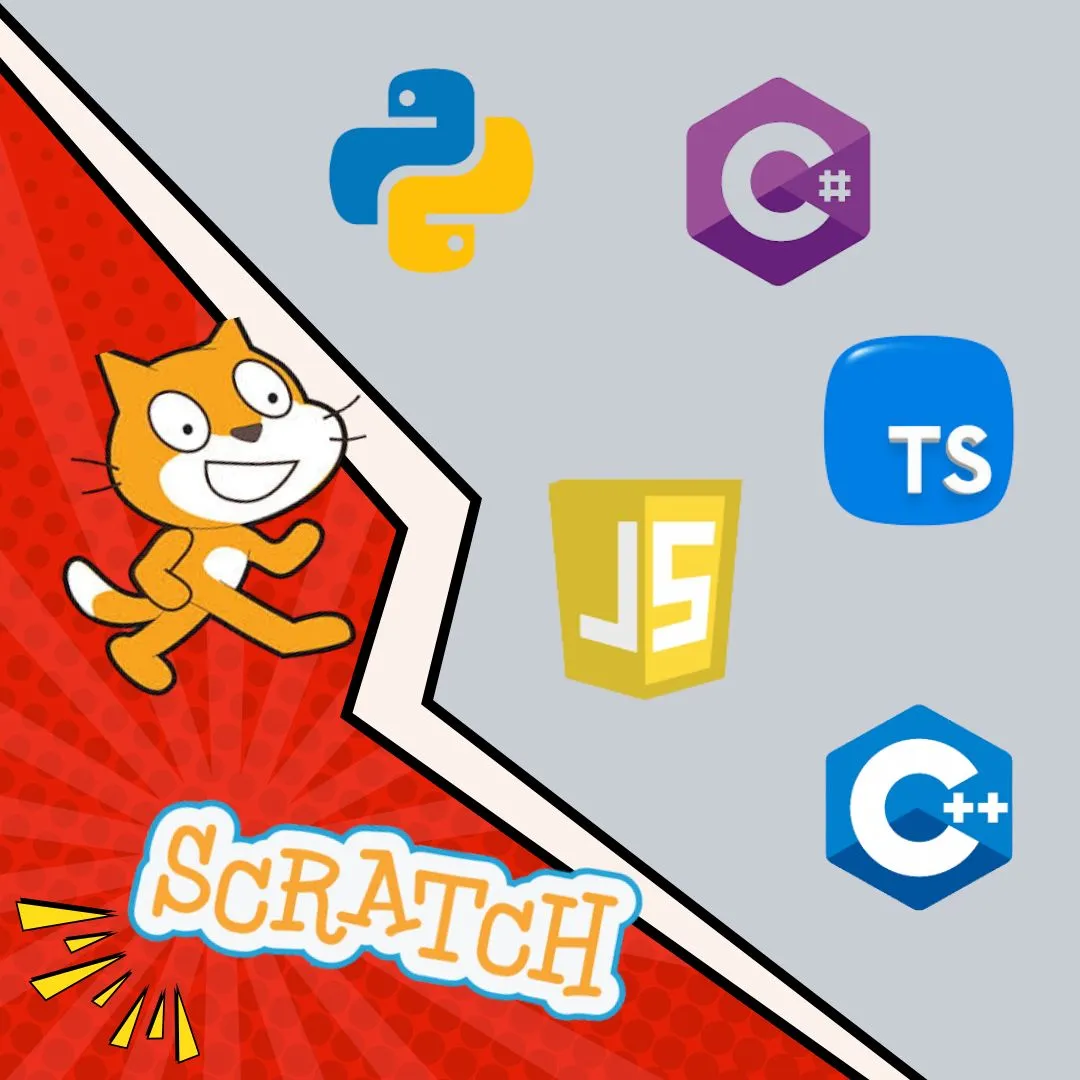
Every young coder reaches a moment of curiosity after building games in Scratch. They have mastered sprites, created fun coding projects, experimented with beginner coding games, and maybe even built Motion Sensing Games using webcam blocks. Now parents start asking an important question: what comes next, and what is the best programming language to learn after Scratch?
This decision can shape how a child experiences coding for years. The right next step should build logical thinking, strengthen problem solving skills, and keep creativity alive. In this guide, we will explore Python and compare it with other popular languages for kids so families can confidently choose the next stage in their child’s coding journey.
Why Parents Ask What Is the Best Programming Language to Learn After Scratch
Scratch is visual and block based. It teaches sequencing, loops, conditionals, and variables in a playful way. Kids drag and snap blocks together to create animations, games, and interactive stories. It is an excellent starting point.
However, as children grow, they are ready for text based coding. Parents begin searching for the best programming language to learn because they want something that:
Builds real world skills
Strengthens computational thinking
Is not too complex
Encourages creativity
The transition must feel natural, not overwhelming. That is where comparing Python to other languages becomes helpful.
Why Python Is Often Called the Best Programming Language to Learn for Kids
Python is widely considered the best programming language to learn for beginners because it reads almost like English. It removes confusing symbols and focuses on clarity.
For example, compare a simple print statement:
Python
print Hello World
Other languages often require brackets and semicolons. Python keeps it simple. This simplicity allows kids to focus on logic instead of syntax.
At Junior Coderz, students moving from Scratch to Python often feel comfortable quickly because many core ideas remain the same. Variables, loops, and conditionals are still there. They just look different.
Comparing the Best Programming Language to Learn With JavaScript
JavaScript is powerful and widely used for websites. Some parents wonder if it is the best programming language to learn instead of Python.
Here is a comparison table:
| Feature | Python | JavaScript |
| Readability | Very clear | Slightly complex |
| Beginner Friendly | High | Medium |
| Web Development | Good | Excellent |
| Syntax Simplicity | Easy | Moderate |
JavaScript is excellent for web projects, but for ages 11 to 14, Python often feels smoother as a first text based language. Once logical foundations are built, learning JavaScript becomes easier later.
Is Java the Best Programming Language to Learn for Structured Thinking
Java is another popular language. It is strongly typed and structured. While powerful, it can feel overwhelming for younger students.
A simple program in Java requires more setup compared to Python. For children transitioning from Scratch programming, too much structure too early can reduce confidence.
Python offers a gentler learning curve while still teaching real programming concepts like functions, loops, and logical conditions.
How Scratch Prepares Kids for the Best Programming Language to Learn
Scratch builds an invisible bridge to Python. Let us compare basic Scratch concepts to Python.
Scratch Loop Example
When green flag clicked
Repeat 10
Move 10 steps
Python Loop Example
for i in range 10
print Moving
Both teach repetition. The logic remains the same. Scratch users already understand:
Sequencing
Variables
Conditionals
Events
This is why Python becomes the best programming language to learn after Scratch. It builds on existing knowledge rather than replacing it.
How the Best Programming Language to Learn Strengthens Problem Solving
Coding is not about memorizing commands. It is about thinking clearly. Python helps kids:
Break problems into smaller parts
Test solutions step by step
Debug errors logically
Write reusable functions
For example, students can build a simple guessing game.
Sample Python Logic:
secret_number = 7
guess = int input Enter your guess
if guess == secret_number
print Correct
else
print Try again
This simple activity teaches input handling, conditionals, and feedback loops. These concepts strengthen critical thinking.
Interactive Learning Projects in the Best Programming Language to Learn
At Junior Coderz, students do not just read about Python. They build projects.
Project Ideas:
Number guessing games
Quiz apps
Simple chatbots
Mini calculators
Score tracking games
These projects connect directly to previous Scratch experiences such as AI style chatbot tutorials and clicker games. Kids recognize familiar patterns and gain confidence.
Why the Best Programming Language to Learn Should Be Age Appropriate
Ages 11 to 14 are ideal for Python because children begin developing abstract thinking skills. They can understand logic without needing visual blocks.
The Python Hybrid Program at Junior Coderz combines structured lessons with guided projects. Students practice:
Loops
Conditionals
Functions
Lists
Basic algorithms
This balance ensures that coding remains fun while becoming more advanced.
Beyond Python Is It Still the Best Programming Language to Learn Long Term
Parents sometimes worry about future relevance. Is Python still the best programming language to learn for long term growth?
Python is used in:
Artificial intelligence
Game development
Data science
Web applications
Automation
Learning Python builds foundations that transfer to other languages easily. Once a child understands one language deeply, learning others becomes much easier.
Teaching Logical Structure Through Python Functions
Functions are powerful tools for organizing code.
Example:
def greet
print Welcome to the game
greet
Functions teach kids to break large programs into smaller reusable blocks. This mirrors how engineers solve complex problems.
These skills prepare students for more advanced programming challenges later in high school and beyond.
Connecting Python to Real World Technology
When kids learn Python, they are not just coding for fun. They are building skills used in real industries.
For example:
Apps use conditionals
Games use loops
AI uses logic and data
Websites use structured programming
Understanding these connections increases motivation and excitement.
Start Your Python Journey with Junior Coderz
If your child has mastered Scratch and is ready for the next challenge, now is the perfect time to explore structured Python learning.
Visit Juniorcoderz to book coding classes, enroll in Scratch workshops, or join the Python Hybrid Program for ages 11 to 14. Junior Coderz helps students transition smoothly from beginner coding games to advanced logic projects while keeping learning creative and exciting.
With expert guidance, hands on projects, and supportive instruction, your child can build real world programming skills and confidence.
Conclusion
Choosing what comes after Scratch is an important step in your child’s coding journey. Python offers clarity, flexibility, and real world relevance while remaining beginner friendly. It strengthens logic, encourages creativity, and builds computational thinking that extends beyond the screen.
With the right guidance from Junior Coderz, young learners can confidently move from block based programming to powerful text based coding. The journey from simple games to advanced problem solving begins with one thoughtful choice and the courage to keep learning.
FAQs
What age should kids start Python after Scratch
Most children between 11 and 14 are ready to transition from Scratch to Python.
Is Python harder than Scratch
Python introduces text based coding, but the logic is similar. With structured teaching, the transition is smooth.
Can kids build games in Python
Yes. Kids can build simple text based games and even graphical projects as they advance.
Should my child learn multiple languages at once
It is better to master one language deeply before moving to others.
Does learning Python improve academic skills
Yes. Python strengthens logical reasoning, mathematical thinking, and structured problem solving.