Have you ever wondered why characters fall down, jump up, or bounce back in games your kids love? That magic comes from game physics. In Scratch, kids can explore these ideas in a fun and visual way. This guide introduces physics in scratch through simple explanations, hands on examples, and playful experiments. Parents, educators, and young coders will see how gravity, motion, and bouncing can turn beginner coding games into exciting interactive experiences.
Understanding Physics in Scratch Through Simple Game Motion
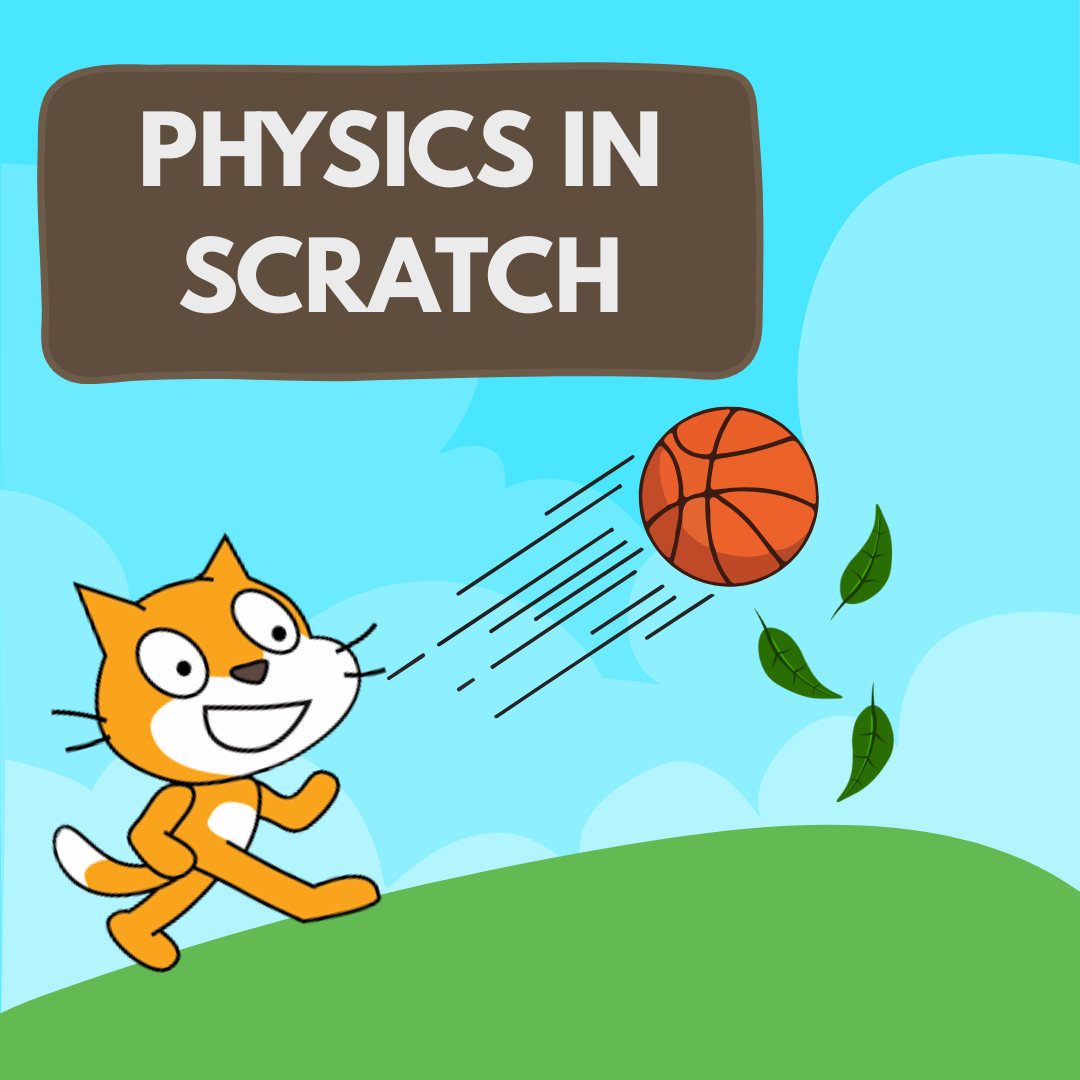
At its core, physics in scratch is about making movement feel real. Instead of sprites floating randomly, they react like objects in the real world. Gravity pulls them down, motion pushes them forward, and bouncing helps them interact with the ground or walls. Scratch uses simple blocks that let kids experiment without complicated math. This makes Scratch programming perfect for coding for kids who are just starting their creative journey.
In Scratch, motion is controlled by changing x and y positions. When kids understand that x moves left and right and y moves up and down, they are already learning the basics of game physics in a friendly way.
How Gravity Works in Physics in Scratch Games
Gravity is the force that pulls everything down. In physics in scratch, gravity is usually created by slowly decreasing a sprite’s y value. Each step downward simulates falling. This teaches kids cause and effect in a very visual way.
Here is a simple gravity idea kids often use:
When the green flag is clicked, set vertical speed to 0. Forever, change vertical speed by minus one and change y position by vertical speed. If touching ground, set vertical speed to 0.
This small logic helps kids understand how real world gravity works while building fun coding projects like platform games or jumping characters.
Using Motion and Speed with Physics in Scratch
Motion adds life to games, and physics in scratch helps that motion feel smooth and natural. Speed is usually controlled with variables. Kids can increase or decrease speed to see how fast a sprite moves across the screen.
For example, a sprite moving too fast might feel unrealistic, while slower movement feels heavier. This teaches kids to test, adjust, and improve their projects. These skills are valuable not only in Scratch programming but also in real problem solving.
Motion physics also introduces ideas like acceleration without using scary technical terms. Kids learn by seeing changes happen on the screen.
Bouncing Effects Explained with Physics in Scratch
Bouncing is one of the most fun effects for young coders. With physics in scratch, bouncing is created by reversing direction when a sprite hits a surface. This is perfect for ball games, pong style projects, and obstacle challenges.
A simple bounce logic might look like this in Scratch:
Move a few steps. If touching edge, turn around.
Kids quickly learn that changing direction creates a bounce effect. This encourages experimentation, which is at the heart of fun coding projects.
Adding Friction Using Physics in Scratch Logic
Friction slows things down. In physics in scratch, friction can be simulated by gradually reducing speed. When a character stops sliding after landing, kids see how friction works in real life.
For example, when a sprite touches the ground, you can multiply its speed by a small number like 0.9. Over time, the sprite slows down naturally. This simple trick makes games feel more realistic and teaches kids how forces interact.
Friction is especially useful in racing games or platformers where movement control matters.
Building a Jump Mechanic with Physics in Scratch
Jumping combines gravity, motion, and timing. In physics in scratch, a jump usually happens by giving the sprite an upward boost and then letting gravity pull it back down.
Kids learn that jumping should only work when the character is on the ground. This introduces logical thinking and conditions. It also prevents double jumping unless intentionally designed.
This concept is often used in beginner coding games and helps children understand rules and structure in programming.
Creating a Simple Platform Game Using Physics in Scratch
Platform games are a perfect way to apply physics in scratch concepts together. Characters fall due to gravity, land on platforms, jump over gaps, and bounce off walls.
Here is a simple table showing how physics elements are used:
Physics Concept | How It Is Used in Scratch
Gravity | Pulls character down
Motion | Moves character left and right
Bounce | Reacts to edges or obstacles
Friction | Slows movement on ground
By combining these ideas, kids build complete games while learning structured thinking and Scratch programming fundamentals.
Common Mistakes When Learning Physics in Scratch
Learning physics in games is fun, but beginners may face challenges. Characters might fall through the ground, bounce endlessly, or move too fast. These mistakes are valuable learning moments.
Encourage kids to test one change at a time. Adjust gravity values slowly. Check collision logic carefully. This process builds patience and problem solving skills that go beyond coding for kids.
Mistakes are part of learning, and Scratch makes fixing them approachable and enjoyable.
Why Physics in Scratch Helps Kids Learn Real World Concepts
More than just coding, physics in scratch introduces real world science ideas in a playful way. Kids learn how forces interact without needing formulas. They see gravity, friction, and motion in action.
This builds confidence and curiosity. Children start asking questions and testing ideas, which is exactly how learning should feel. These experiences also prepare them for more advanced coding and STEM topics in the future.
Call to Action
If your child is excited about building games and learning through play, Junior Coderz is here to help. Visit Juniorcoderz to book coding classes, enroll in Scratch workshops, or explore coding for kids programs. At JuniorCoderz, students create real projects, improve their skills step by step, and have fun while learning programming in a supportive environment.
Conclusion
Learning game physics through Scratch turns coding into an exciting adventure. By experimenting with gravity, motion, friction, and bouncing, kids gain confidence and creativity. These playful lessons inspire curiosity and build strong foundations for future learning. Encourage your child to explore, experiment, and grow with Scratch, and visit JuniorCoderz to begin a guided and fun coding journey today.
FAQs
What is game physics in Scratch?
Game physics in Scratch refers to how movement, gravity, and collisions are simulated using simple blocks and logic.
Can beginners understand gravity and motion in Scratch?
Yes, Scratch is designed for beginners. Visual blocks make complex ideas easy to understand for kids.
Do kids need math skills to learn physics in Scratch?
Basic counting is enough. Most learning happens through experimentation and observation.
What age is best for learning Scratch game physics?
Kids as young as seven can start exploring these concepts with guidance and practice.
How does learning Scratch physics help in the future?
It builds logic, creativity, and problem solving skills that are useful in advanced coding and real world learning.