Imagine pressing a key on your keyboard and instantly hearing a drum beat, a laser sound, or a funny voice clip that you created yourself. That is the magic of building your own music in scratch game project. Instead of only making characters move, kids can turn Scratch into a mini music studio where they compose beats, trigger sound effects, and design rhythm challenges.
This type of project mixes creativity with logic. Children learn how sounds work in programs, how timing creates rhythm, and how code can control audio just like a real instrument panel. For parents and educators, it is a powerful way to teach coding for kids while also exploring art and music.
In this guide, young coders will learn how to add sound blocks, build a custom soundboard, create cool effects, and design a simple rhythm game that reacts to player input. By the end, they will have a fun coding project that looks like a game and feels like a digital DJ pad.
Getting Started with music in scratch game
Before adding beats and melodies, open Scratch and create a new project. Choose a sprite that will act as your sound controller. This could be a drum icon, a robot DJ, or any character you like.
Next, click on the Sounds tab. Here you can:
- Choose a sound from the Scratch library
- Record your own voice or noise
- Upload a custom audio file
Add several different sounds such as:
- Drum kick
- Clap
- Bell
- Funny voice
- Short melody
These sounds will become the buttons of your soundboard.
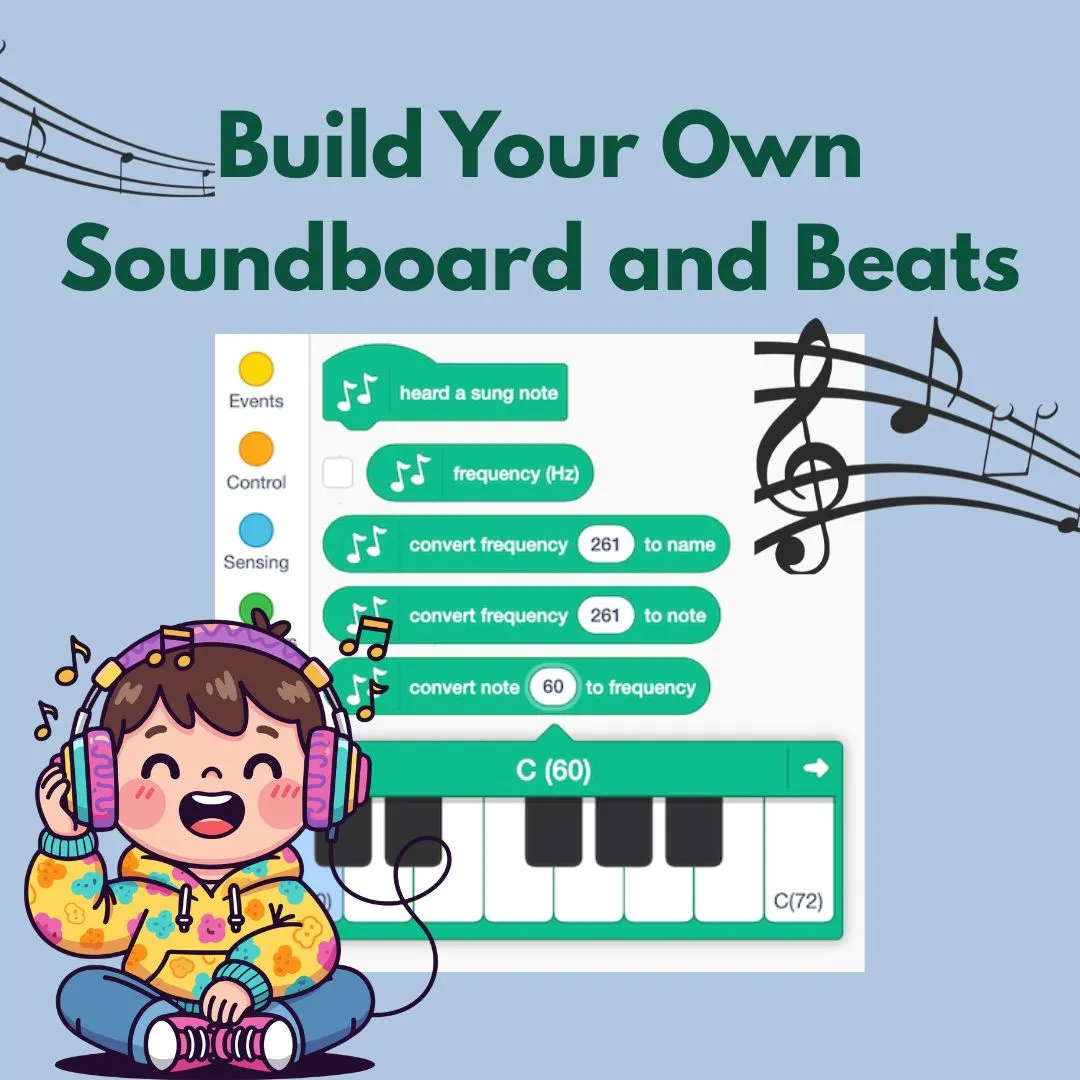
Now go back to the Code tab and open the Sound blocks category. You will see blocks like:
- play sound until done
- start sound
- stop all sounds
- change pitch effect
- change pan left right effect
These are the building tools for your audio system.
Using Sound Blocks for music in scratch game
Let’s make the first interactive sound button.
- Drag a
when [space key] pressed block - Attach a
play sound [drum] until done block under it
Now press the space bar. You should hear the drum sound play once.
You can repeat this for different keys:
when [a key] pressed
play sound [clap] until done
when [s key] pressed
play sound [bell] until done
Each key becomes a musical button. This teaches beginners how events trigger actions, which is a core idea in Scratch programming and beginner coding games.
Building a Soundboard for music in scratch game
A real soundboard lets users press many buttons quickly. To copy that feeling, create multiple sprites, each with its own sound.
Example setup:
| Sprite Name | Key Press | Sound Played |
| Drum Pad | A | Kick drum |
| Snare Pad | S | Snare hit |
| Bell Pad | D | Bell tone |
| Voice Pad | F | Recorded voice |
For each sprite, use:
when [key] pressed
start sound [chosen sound]
Using start sound instead of play sound until done allows sounds to overlap. Kids can press many keys quickly and build layered beats like a real DJ. This is perfect for fun coding projects that encourage experimentation.
Adding Custom Effects to music in scratch game
Sound effects make audio more exciting. Scratch includes built in audio effects that you can change with code.
Try this:
when [g key] pressed
change pitch effect by 20
start sound [melody]
clear sound effects
You can also pan sound left or right:
change pan left right effect by 50
These effects help children understand variables and numeric changes. It also shows how small code tweaks create big creative differences.
A useful trick is to reset effects after playing:
clear sound effects
This stops sounds from becoming too distorted over time.
Creating Rhythm Challenges in music in scratch game
Now turn the soundboard into a mini rhythm game.
Idea: a sprite flashes colors and the player must press the correct key on beat.
Basic steps:
- Make a variable called score
- Change the sprite costume every second
- When the correct key is pressed at the right time, increase score
Example logic:
when green flag clicked
forever
wait 1 seconds
switch costume to next costume
end
Then for scoring:
when [a key] pressed
if <touching color [red] ?> then
change score by 1
start sound [correct beep]
else
start sound [wrong buzz]
end
This builds timing, logic, and reaction skills while keeping the activity playful and musical.
Organizing Beats and Loops in music in scratch game
Loops help create repeating beats like real background tracks.
Use a forever loop to make automatic music:
when green flag clicked
forever
start sound [kick]
wait 0.5 seconds
start sound [snare]
wait 0.5 seconds
end
You can store different rhythms in custom blocks.
Create a block called play beat pattern:
define play beat pattern
start sound [kick]
wait 0.5 seconds
start sound [kick]
wait 0.5 seconds
start sound [snare]
wait 1 seconds
Then call that block inside a loop. This teaches structured thinking and reusable code, which is a big step forward for kids learning Scratch programming.
Testing and Debugging music in scratch game
Encourage kids to test each feature one by one.
Checklist for testing:
| Feature | What to Check |
| Key controls | Does each key trigger the correct sound |
| Overlapping sounds | Do beats play smoothly without cutting off |
| Effects reset | Do sounds return to normal after effects |
| Rhythm scoring | Does the score change only on correct input |
If something breaks, use simple debugging steps:
- Remove extra blocks
- Test a single sound first
- Add loops and effects back slowly
This process teaches patience and logical troubleshooting.
Teaching Concepts Through music in scratch game
This project is more than audio fun. It teaches:
- Events through key presses
- Sequencing through timed waits
- Variables through score tracking
- Loops through repeating beats
- Creativity through custom sounds
For educators, this connects coding for kids with music education. For parents, it shows that programming is not only about screens and numbers but also about art and expression.
Kids start seeing code as a tool to build their own instruments and interactive experiences.
Learn Coding at JuniorCoderz
If your child enjoys building projects like this, imagine what they can create with guided lessons and expert support. At JuniorCoderz, students explore Scratch programming, game design, animation, and real world problem solving through live, interactive classes.
Children learn step by step, create their own fun coding projects, and build strong thinking skills while having fun. Whether your child is a complete beginner or already experimenting with code, JuniorCoderz helps them turn ideas into working games, stories, and creative apps.
Visit Juniorcoderz to book coding classes, join Scratch workshops, and start an exciting journey into coding for kids today.
Conclusion
Building a Scratch soundboard and rhythm game turns coding into an interactive music playground. Kids learn to trigger sounds, control timing, add effects, and design challenges that react to player input. Along the way they develop creativity, structured thinking, and confidence in Scratch programming.
Projects like this show that coding is not just about games with jumping characters. It can be about beats, voices, and playful digital instruments created from simple blocks of code.
Encourage your child to start experimenting, remix their sounds, and build their own musical ideas. And for guided learning, exciting projects, and supportive teachers, visit JuniorCoderz and begin a fun journey into creative coding today.
FAQs
How many sounds can I add in one Scratch project?
You can add many sounds to each sprite. Scratch projects can hold dozens of short audio clips, but keeping them organized makes coding easier.
Can kids record their own voice for soundboards?
Yes. Use the record button in the Sounds tab to capture voices, claps, or homemade effects. This makes projects more personal and creative.
Is Scratch good for teaching music concepts?
Absolutely. Timing, rhythm, and repetition in code match real musical ideas, helping kids understand beats and patterns.
Do I need musical knowledge to build this project?
No. Beginners can start with simple drum and clap sounds. The project is about experimenting, not perfect music theory.
How does this help with learning to code?
Kids practice events, loops, variables, and logic. These are the same core skills used in advanced programming later on.