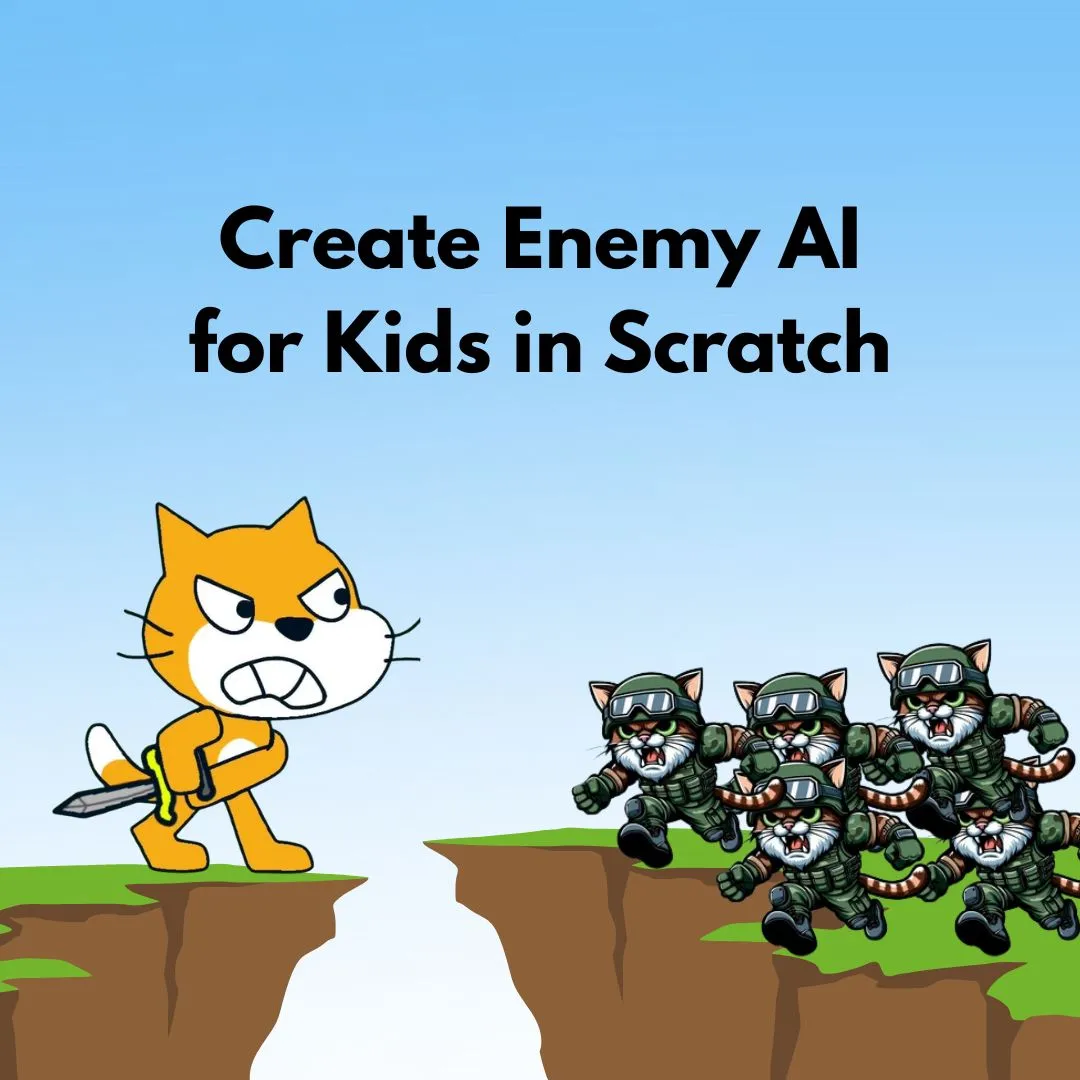
Creating smart and fun enemies is one of the most exciting moments for young game designers. Learningor Kids in Scratch  how scratch enemy AI works helps kids turn simple games into real adventures filled with challenge, strategy, and creativity. When children design enemies that react, chase, or guard areas, they begin to think like real programmers while still having fun with colorful characters and stories.
What Is scratch enemy AI and Why Kids Love It
scratch enemy AI means giving enemy characters simple decision making abilities using blocks instead of complex code. In Scratch programming, enemies can follow players, patrol paths, or react to actions using easy logic blocks. Kids enjoy this because it feels like magic when a character suddenly becomes smart. This approach makes beginner coding games more exciting and helps children understand how computers think step by step.
Why scratch enemy AI Is Perfect for Young Coders
Learning scratch enemy AI builds problem solving skills and logical thinking at an early age. Kids learn cause and effect by deciding what an enemy should do when it sees the player. This is a powerful way to introduce coding for kids without overwhelming them. It also boosts creativity because children can invent unique villains, monsters, or robots for their fun coding projects.
Planning Your Game with scratch enemy AI
Before building anything, kids should plan their game. Ask simple questions like what is the enemy’s goal, how should it move, and what happens if it touches the player. Planning scratch enemy AI teaches kids how real developers think before coding. It also reduces frustration because the game logic feels clearer and more organized from the start.
| Planning Step | Question to Ask | Kid Friendly Tip |
| Enemy Role | Is it chasing or guarding | Keep it simple first |
| Movement | Walk, glide, or teleport | Use arrows on paper |
| Interaction | What happens on touch | Make it fun not scary |
Building Basic scratch enemy AI Using Scratch Blocks
To build it, kids start with basic blocks like when green flag clicked, forever, and if then. An enemy sprite can constantly check where the player is and respond. This step introduces loops and conditions in a natural way. Kids see how repeating checks make characters feel alive, which is a core idea in Scratch programming.
Example logic steps kids can follow
Choose an enemy sprite
Add a forever loop
Check distance to player
If close, move toward player
Adding Movement to scratch enemy AI
Movement makes enemies exciting. With this game, kids can use glide or change x and y blocks to create chasing behavior. They learn coordinates without even realizing it. This strengthens math skills while keeping learning playful. Movement also helps kids understand how games respond in real time.
| Movement Type | Block Used | Difficulty |
| Chasing | point towards | Easy |
| Patrolling | change x by | Easy |
| Random | pick random | Medium |
Making Smart Decisions with scratch enemy AI
Smart decisions make enemies feel real. Using it , kids can add conditions like if touching color or if distance is less than a number. These ideas introduce logic gates in a simple way. Children begin to understand how computers make choices, which is a key STEM concept hidden inside fun coding projects.
Common Mistakes When Using scratch enemy AI
Sometimes kids make enemies too fast or too strong. With scratch enemy AI, balance is important so the game stays fun. Teaching kids to test and adjust values helps them learn debugging skills. Debugging builds patience and confidence because kids see mistakes as part of learning, not failure.
Improving Gameplay with scratch enemy AI
Once the basics work, Game can be improved by adding levels, sound effects, or power ups. Enemies can become smarter as levels increase. This keeps kids engaged and encourages them to keep experimenting. It also shows how small changes can improve a game’s overall experience.
Learn and Create with JuniorCoderz
If your child loves building games and smart characters, JuniorCoderz is the perfect place to grow those skills. Our Scratch workshops and coding classes guide kids step by step through game design, logic building, and creative problem solving. At JuniorCoderz, students learn to turn ideas into real projects while having fun in a supportive learning environment. Visit Junior Coderz to book coding classes and help your child start an exciting coding journey.
Final Thoughts on scratch enemy AI
Learning scratch enemy AI helps kids move from basic animations to real interactive games. It strengthens logical thinking, creativity, and confidence while keeping learning fun and engaging. By practicing these concepts and exploring guided classes at JuniorCoderz, young coders can build amazing projects and develop skills that support future STEM success.
FAQs
What age is best to learn enemy behavior in Scratch
Kids as young as 7 can start learning basic enemy behavior using visual blocks and simple logic.
Is enemy AI difficult for beginners
No, Scratch makes it beginner friendly by using drag and drop blocks instead of text code.
Can kids build full games with enemies
Yes, kids can create complete games including levels, scoring, and smart enemies.
Does learning Scratch help with future coding
Absolutely, Scratch builds a strong foundation for logic, sequencing, and problem solving.
How long does it take to learn these skills
With regular practice, kids can build simple enemy logic in just a few sessions.